Chef-Approved Tips For Making The Best Peanut Sauce
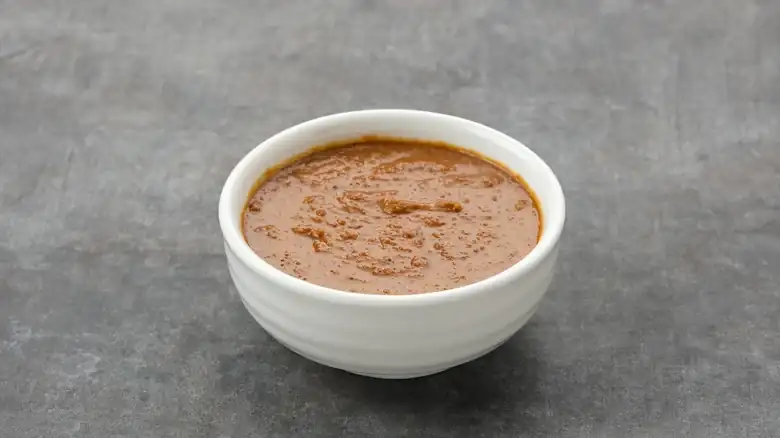
The perfect peanut sauce does exist, you just have to know exactly how to rise above and beyond the average recipe to create it. Peanut sauce is traditionally used in Asian cuisine and shows up in multiple recipes across the continent, most notably in Thai dishes.
“I use ground peanuts and peanut butter for the texture, I have tried many organic versions and found Jiffy the best brand for making peanut sauce,”
Typically, the key ingredients in peanut sauce are peanut butter, soy sauce or tamari, garlic-chili sauce, rice vinegar, and sugar. According to Wong, the first step to creating a rich sauce is considering the texture. "I use ground peanuts and peanut butter for the texture, I have tried many organic versions and found Jiffy the best brand for making peanut sauce," explains Wong. Since peanut is the main flavor of the sauce, finding a good quality peanut butter is a non-negotiable. This will prevent it from separating and instead offer it a fuller consistency.
Things to add or swap for better tasting peanut sauce
While peanut sauce recipes often feature the same standard set of ingredients, following tradition might not be the way to master this sauce's potential. Wong's advice strongly encourages a deviation away from the traditional ingredients if you really want a stand-out sauce. One addition that Wong stands by is tamarind juice, which he says adds a slight tang to help the richness. Since tamarind has a distinct sweet, sour and lingering cinnamon taste, this is sure to add depth to the sauce. For Wong, swapping out white sugar for caramel sugar is another way to define the flavors in the sauce. He notes that by switching to caramel sugar, his sauce benefits from a deep "brown color and a malty flavor." Yum.
Peanut sauce is almost always better when you lean into the bold flavors and get confident balancing them. Adding lime juice is a common addition to the recipe if the sauce lacks acidity. This paired with Wong's alternative of tamarind juice will bring the citrus flavors to the forefront — perfect for salads and leafy dishes. Similarly, grated ginger or ginger paste makes for a spicier, warmer take on the sauce if you prefer grounded flavors. Considering umami — the fifth "pleasantly savory" taste — is also useful when making peanut sauce. In his practice, it is what Wong swears by. "I usually add toasted shrimp paste for more umami, but not at Kancil, because it's a 100% vegan dish," says Wong.