El 9% de los restaurantes de servicio completo corren el riesgo de cerrar en 2026
Nuevos datos de Black Box Intelligence identificaron a dichas unidades como aquellas que perdieron el 30% o más de sus ventas máximas el año pasado.
New data from Black Box Intelligence identified such units as those that lost 30% or more of their peak sales last year.
New data from Black Box Intelligence has unveiled some cause for concern about full-service restaurant performance in the coming year. The performance and analytics company compared 2025 restaurant sales against their peak annual performance since 2019 and found that 9% of all full-service units are considered at risk for closure in 2026.
The analysis identified such units as those that lost 30% or more of their peak sales in 2025. Of note, 3% of full-service restaurants have seen sales drop by more than 50%. For those locations, the question isn’t if they will close, but when, according to Black Box vice president of insights and knowledge Victor Fernandez.
“In an environment where cumulative inflation has driven costs up by nearly a third since 2019, it is virtually impossible for a unit to remain viable after losing 30% or more of its peak sales,” he said in a statement.
Profits have also taken a major hit amid this inflationary backdrop; 42% of operators said their businesses weren’t profitable in 2025, while 60% of operators said their business conditions have deteriorated, and just 15% said they were better than they were in 2024, according to a new report from the National Restaurant Association.
Black Box notes that while 85% to 90% of the industry remains resilient, the remaining 10% to 15% faces significant headwinds. That said, the full-service segment is far more vulnerable than the limited-service segment. While 9% of full-service units are considered at risk, just 4% of limited-service restaurants meet the at-risk criteria.
This disparity continues a recent trend in which the casual-dining segment has generated a deficit of 3.3% in net unit growth since 2022, while the quick-service segment grew 5.8% during the same period, and fast casual grew 15.5%.
Beyond segments, some markets are also at higher risk where local economic pressures and high restaurant saturation intersect. Black Box Intelligence breaks down the markets with the highest concentration of units performing at or below 70% of their peak sales, with at-risk areas including Fresno-Visalia, Calif., Oklahoma City and Tulsa, Okla., Harlingen, Texas, Little Rock-Pine Bluff, Ark., Louisville, Ky., Chattanooga, Tenn., Macon, Ga., Montgomery-Selma, Ala., Mobile, Ala., and Pensacola, Fla.
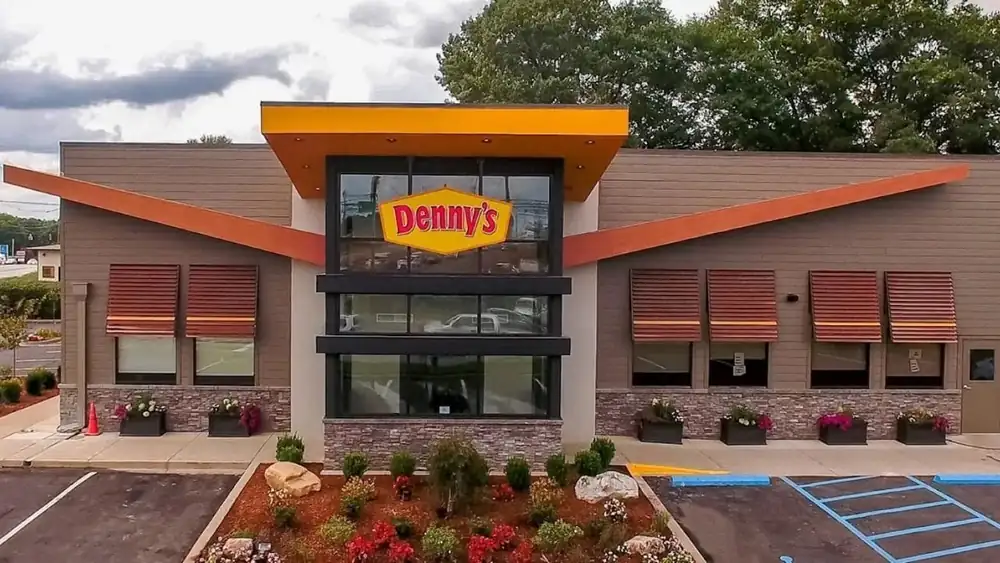
Black Box’s analysis would continue an industrywide trend from throughout the past couple of years in which several full-service brands have shuttered or announced plans to shutter big chunks of units, including Denny’s, Outback Steakhouse, Applebee’s, Red Robin, On the Border, Macaroni Grill, Smokey Bones, Hooters, Bahama Breeze, and more.
It’s worth noting that, despite such challenges, chains are actually faring better than independent restaurants without the cushion of scale to help navigate rising costs. New data from Technomic finds that the independent restaurant sector shrunk by 2.3% in 2025, versus the total number of chain locations increasing by 1.4%. Still, chain locations have expanded by an average annual rate of just 0.7% since 2019.
“To navigate this (environment), brands must move from reactive closures to proactive portfolio optimization,” Fernandez said.
Black Box recommends benchmarking unit-level performance against local market competitors, not just internal historic metrics.
“If a unit is losing traffic while the local market is growing, the issue is execution, not the economy,” he said. “However, if the market is saturated and traffic is down across the board, operators should consider strategic closures to consolidate volume into their top-performing sites.”
In saturated markets, closing underperforming units often triggers a traffic shift to nearby locations, improving the financial health of the remaining units and overall brand.
“The silver lining here is that a leaner portfolio often becomes a stronger one,” Fernandez said. “When a brand stops subsidizing its bottom 10% of units, it can reallocate capital, management attention, and marketing spend to the units with the highest growth potential. This ‘traffic transfer’ effective is a powerful tool for survival.”