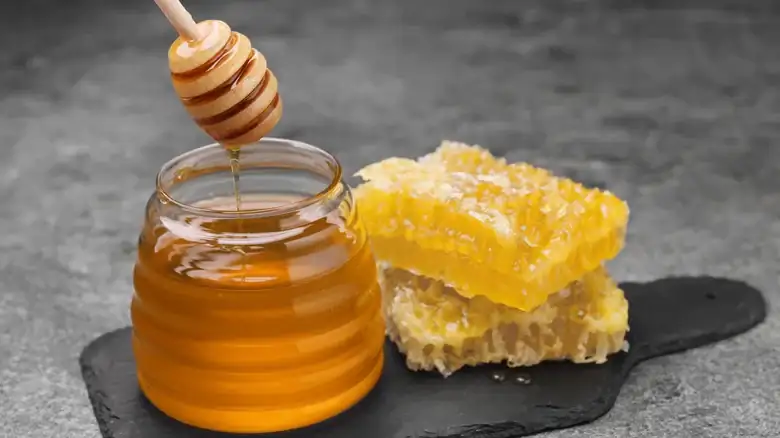
How To Use A Honey Dipper
Never used a honey dipper in your life? You're probably not alone. But if you're used to generously drizzling your honey with a spoon, it might be time to get in on this handy tool that's almost entirely made for serving honey.
So, if you have a penchant for dolloping honey into your cups of tea or freshly made chai, or adding a kick to your French toast, a honey dipper will make your life easier. It's simple to use: dunk or cover the dipper's head in honey and begin to continuously rotate it (at a horizontal angle) by using the handle. As long as the dipper is in rotation, it'll set into the grooves and won't leave a honey trail all over your countertop. Once you have the honey dipper hovered over its destined desert, drink, or treat, you can stop rotating and allow it to drip.
Why you should use a honey dipper
While spooning overflowing servings of honey may be the custom you're used to, a honey dipper is actually the correct way to serve this golden crop and will provide more precision. After all, twiddling your fingers to stop and start the flow of honey is a better technique than scooping or scraping honey out of a jar with a spoon or knife. And if you use honey in specific measurements and baking recipes, exactness is always going to be your friend (no-one wants to mess up their perfect Basque cheesecake creation).
Truth be told, honey dippers are also very cool-looking tools. Keeping a honey dipper on the counter doubles up as a décor piece if you'd like to bring some life into your kitchen aesthetic. If you're into rustic-style kitchens, then a honey dipper would easily complement the vibe. Experimenting with positions and sizes is all part of the fun (as well as the cooking expertise, of course). Honey dippers are most commonly made of wood or metal (typically stainless steel) but they can also be made of porcelain, glass, or plastic.