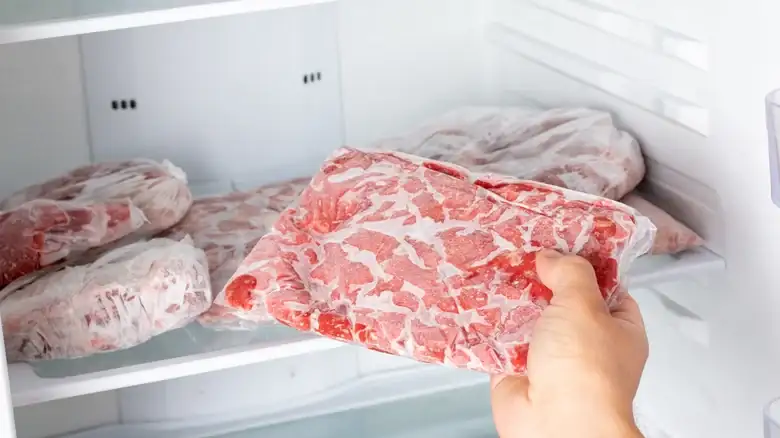
La señal de alerta que no debes pasar por alto cuando se trata de carne congelada
Congelar porciones de carne es una excelente manera de ahorrar dinero y reducir el desperdicio de alimentos. Pero si tienes la costumbre de congelar carne, probablemente sepas que es fácil perder la noción del tiempo una vez que las cosas están guardadas.
Freezing portions of meat is a great way to save some money and cut down on food waste. But if you're in the habit of freezing meat, you probably know that it's easy to lose track of time once things are stashed away. If you've opened the freezer looking for a package of pork chops or a bag of chicken wings, and you're not sure if they're still safe to eat, freezer burn is the red flag you shouldn't overlook.
Freezer burn is an unfortunate fact of life if you freeze food regularly. It appears as a blanket of tiny ice crystals, which is a result of moisture evaporating from the food. Once it strikes, it leaves behind a dry, leathery texture that looks burned, and it can destroy the flavor of the food. Technically it's completely safe to eat food with freezer burn, but the taste and texture will never be the same.
Depending on how well you package the food, how long it sits in the cold, and at what temperature, freezer burn can develop in only a day or two. There's no way to fix food that's been affected by the burn, but there are a couple of ways to prevent it from ruining expensive steaks, ground beef, and anything else you want to stockpile.
How to prevent freezer burned meat
Freezer burn is easy to prevent if you know what you're up against, which is the cold, dry air inside the freezer. Any time that air is allowed to come in contact with the surface of the meat, moisture will start evaporating. With that in mind, you can prevent freezer burn by packaging food properly. Wrap each piece of meat tightly with wax paper, which creates a barrier between the meat and the air. After it's wrapped, store the food in the smallest possible freezer bag to cut down on air exposure. If you freeze a lot of meat, a vacuum sealer is a game-changing gadget that will give the food a much longer shelf life.
Next, make sure that your freezer is also set to the right temperature. Shoot for no more than zero degrees Fahrenheit, but colder is even better. Avoid big temperature fluctuations as well, like leaving the door open or storing hot food next to frozen meat.
Of course, all that packaging will be for nothing if you forget that the meat is in the freezer. Always label every package with the day and the date, and it's also nice to include an expiration date — although it's safe to eat frozen meat that's expired so long as it's been kept at zero degrees or colder. And follow the rule of FIFO (first in, first out) — the old food should always get eaten first.