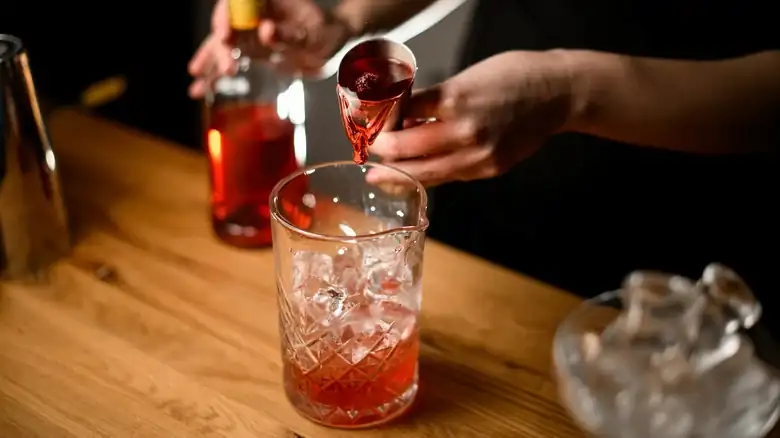
Measure Alcohol With This Simple Culinary Tool If You Don't Have A Jigger
Learning how to use a cocktail jigger like a pro can be an asset to any home mixologist. These funky-looking, double-sided, hourglass-shaped measuring devices can be found in an array of sizes and measurements, ranging from ½ ounce to 2 ounces. But while they're certainly good to have, they're not a necessity.
“This translates as one equal part of the drink in terms of ratios (for example, a classic Negroni has three equal parts of Campari, gin, and sweet vermouth). Others include a”
Jiggers are the most useful when speed and efficiency are needed, and when you're at home, there's usually less need to worry about time, compared to working a real bar. Since you're working in ounces with most cocktail recipes, liquid measuring cups would be the most efficient here, as they easily measure in ounces. Teaspoons and tablespoons would also be acceptable, but some conversions would be needed to successfully learn how to make classic cocktails. To help you out when translating measurements, the larger end of a standard double-sided jigger usually equals 1½ ounces or three tablespoons when filled up. Meanwhile, it measures ¾ ounces or 1½ tablespoons on the smaller end.
Other ways to measure alcoholic drinks without a jigger
If you're woefully short on utensils, there are other ways to figure out measurements when mixing cocktails. One of the most impressive skills in bartending is the free pour – or counting — method. Patience and practice are key to this technique, in which you count seconds in your head while pouring your ingredients.The counting helps you judge how many ounces of liquor you're pouring.
As a starting point for your measurements, one second of flow translates to about ½ ounce, and at four seconds, you will have poured a full ounce. This writer found it easiest to practice with water, so I didn't waste alcohol. I also controlled my accuracy and cadence by counting with the "old one thousands" trick. Just say "one thousand" between each second for more precise timing.
Along your mixology journey, you may see other measurement units besides ounces. One of the more common is a "part." This translates as one equal part of the drink in terms of ratios (for example, a classic Negroni has three equal parts of Campari, gin, and sweet vermouth). Others include a "pony," which refers to an ounce-sized shot, and the loosely-measured "splash" and "dash." A "splash" usually refers to mixers and syrups and is no more than ½ ounce. Dashes, on the other hand, are a minuscule amount (think "flick of the wrist" here) and are called for when using bitters.