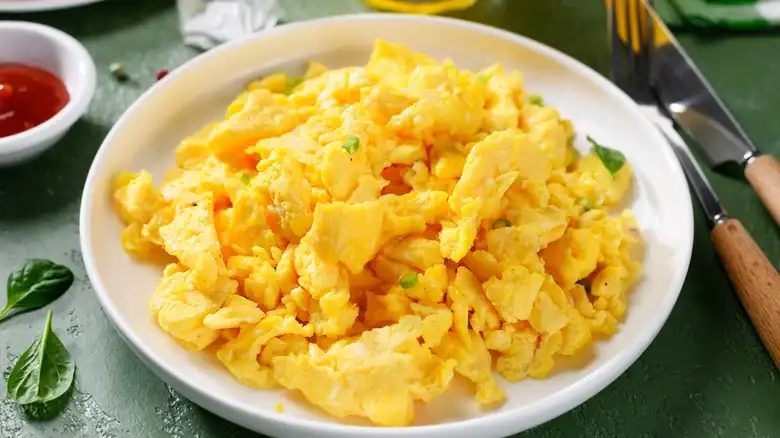
12 Common Mistakes To Avoid When Making Scrambled Eggs
In an effort to discover some of the most common scrambled egg mistakes people make at home — and how to ensure you don't fall prey to them — I consulted three experts. Kyle Mendenhall, senior director of culinary innovation at Snooze A.M. Eatery , had lots to say about how to make perfect scrambled eggs.
In an effort to discover some of the most common scrambled egg mistakes people make at home — and how to ensure you don't fall prey to them — I consulted three experts. Kyle Mendenhall, senior director of culinary innovation at Snooze A.M. Eatery , had lots to say about how to make perfect scrambled eggs. Chef Nelson Serrano-Bahri, director of innovation at the American Egg Board also weighed in on the matter. Lastly, Grace Vallo, founder, chef, and recipe creator for the food blog Tastefully Grace offered quite a few helpful insights that are sure to improve your technique. Keep reading to find out what they divulged so you can avoid typical mistakes moving forward and maintain complete control over your scrambled eggs from start to finish.
Using cold eggs straight from the fridge
The first step to making perfect scrambled eggs involves starting with room temperature eggs. According to expert Grace Vallo, founder, chef, and recipe creator for the food blog Tastefully Grace, using cold eggs is a mistake because they cook unevenly. To avoid this simple blunder and achieve more uniform results, she said you should let your eggs come to room temperature before you start cooking. Cold eggs also take longer to cook. So, if you can remember to bring your eggs to room temperature in advance, the benefits are twofold. To bring eggs to room temperature, you have a couple options. First, simply take the eggs out of the fridge and leave them on the counter. Depending on how cold your fridge is, they should reach room temperature in about 30 minutes, maybe a little longer. If you're in a hurry, you can also place cold eggs in a bowl with warm wa
Not adding water for the fluffiest scrambled eggs
People have a lot of preferences when it comes to scrambled eggs. Some like them super fluffy, and others prefer a denser, creamier texture. If you're part of the camp that hails fluffy scrambled eggs, not adding a touch of water to the mix is a mistake. According to chef Nelson Serrano-Bahri, director of innovation at the American Egg Board, "Water is key for fluffy scrambled eggs! Adding a splash of water to your beaten eggs creates steam during cooking, which expands the eggs and makes them fluffier. Water also evaporates quickly, creating pockets of steam that lift the eggs as they cook." He suggests adding 1 teaspoon of water per egg. And Kyle Mendenhall, director of culinary innovation at Snooze A.M. Eatery, told me milk can also be used to create fluffier scrambled eggs. When you compare the two liquids, water leads to the fluffiest scrambled eggs – b
Not whisking enough or waiting to whisk in the pan
Ensuring your eggs are properly whisked is another key step to making perfect scrambled eggs. According to the director of culinary innovation at Snooze A.M. Eatery, Kyle Mendenhall, "A common mistake that leads to dense, less fluffy scrambled eggs is that the raw eggs (yolk and white) are not mixed together enough before cooking." He noted the yolk and whites cook differently so it's important to make sure they are thoroughly combined before cooking. To avoid under-whisking eggs, the experts recommend beating them with a fork for about one minute (or until they are frothy) before pouring them into the pan. Mendenhall likes to use chopsticks, but whisking eggs with a fork is the most common tool used to achieve the ideal aerated, thoroughly combined texture. Obviously, a whisk works too, but forks are so much easier to clean and since they work just as well,
Using the wrong type of pan or forgetting to grease it before adding eggs
The pan you use to make scrambled eggs is also important. If you use the wrong pan, it can be tricky to maintain control over them while they cook... or lead to the eggs sticking. Chef Nelson Serrano-Bahri, director of innovation at the American Egg Board, told me that a non-stick skillet is the way to go because the eggs won't require an excessive amount of fat (you still want a bit of butter or oil). Plus, they won't stick to the pan so you can easily stir them while they cook. Grace Vallo, Tastefully Grace, agrees with chef Serrano-Bahri and added that sticky or extra large pans make it difficult to control scrambled eggs while cooking, so use a small one instead. She also noted that you should always preheat your pan and grease it with oil or butter before pouring the eggs into the pan. That way, you ensure they don't stick and you can easily manipulate the
Cooking scrambled eggs on too high heat
Another common way that people mess up their scrambled eggs is by cooking them at a super high temperature. You may think this will get scrambled eggs on your plate faster, but really, it just leads to overcooked, dry eggs with a less-than-ideal, rubbery texture. To avoid this blunder, Grace Vallo, Tastefully Grace, said you should cook scrambled eggs slowly, on low or medium heat to ensure they stay soft and creamy. And the American Egg Board's Nelson Serrano-Bahri confirmed what Vallo told me: "It can be easy to overcook scrambled eggs. Cooking scrambled eggs on low heat allows them to cook slowly and gently, preventing overcooking to maintain their moisture." So, while it may be tempting to crank up the heat when you are in a rush, it isn't your best bet. After all, no one prefers dry, rubbery scrambled eggs. Be patient and you'll be rewarded with the soft, c
Not stirring scrambled eggs enough while they cook
Once you pour your thoroughly-whisked eggs into a preheated pan, you still want to pay close attention while they cook. I'm not just talking about watching them either — the experts agree you should continue stirring while they cook. In fact, Grace Vallo, Tastefully Grace, said leaving them to sit in the pan creates large dry curds, which are far from ideal. According to chef Nelson Serrano-Bahri, director of innovation at the American Egg Board, "Continuous and gentle stirring while cooking scrambled eggs prevents large curds from forming and results in evenly cooked scrambled eggs." He and Vallo recommend using a rubber spatula to stir and push the eggs around while they cook. This helps achieve soft folds and smaller curds. And Snooze A.M. Eatery's Kyle Mendenhall said, "In addition, constantly stirring the eggs throughout the cooking process will help mak
Incorporating salt at the wrong time or not adding enough of it
Bland scrambled eggs are more common than you might think, so it's important you not only season them, but you need to sprinkle seasoning at the right time. Otherwise, the flavor lacks and you might even make the eggs watery. Chef Nelson Serrano-Bahri explained you want to add salt right before they are done cooking: "Adding salt at the end of cooking your scrambled eggs keeps the eggs fluffy by reducing the chance of drawing out moisture from the eggs too early, which can make them watery," he said. Instead, Serrano-Bahri recommends adding a pinch of salt and any other seasonings you might like when the eggs are almost fully set and ready to enjoy. Grace Vallo, founder, chef, and recipe creator for the food blog Tastefully Grace, confirmed that under-seasoned scrambled eggs are a common mistake. To ensure you don't have to suffer through bland, yucky eggs, she
Adding too much milk or opting for milk instead of butter
Using too much liquid in your scrambled eggs, whether milk or water, is a recipe for disaster. Too much liquid makes scrambled eggs runny and, as it turns out, this is pretty easy to do. So, instead of using milk, two of our experts recommend swapping it out for butter. "Using butter instead of milk adds fat without introducing additional liquid and reduces the likelihood of a watery scramble," said chef Nelson Serrano-Bahri. And, of course, he also noted butter not only promotes a smoother scramble, but it enhances flavor significantly — and he likes to melt a small amount of butter in the frying pan before adding eggs. Grace Vallo, founder, chef, and recipe creator, also likes to use melted butter in her scrambled eggs. She told me a 3:1 ratio of eggs to butter is ideal. Basically, if you're scrambling three eggs, 1 tablespoon of melted butter should be
Opting for egg white only scrambled eggs
Egg white only scrambled eggs are popular in some circles because they're viewed as a healthier option. While it is true that egg white only scrambles contain fewer calories and fat than when you make the dish with the yolks included, fat in the yolks is actually what leads to the richest flavor and texture possible. If your main priority is limiting fat and calories, egg white only scrambles aren't completely off the table, but they pale in comparison to the real deal. The American Egg Board's Nelson Serrano-Bahri goes so far as to say you should add extra egg yolks to your scramble. The chef said, "Separate a few extra egg yolks and mix them into the whole eggs before cooking your scrambled eggs!" He told me that the extra fat you get from additional yolks contributes "a richer texture and provides more emulsification to trap air." As a result, you get fluffier scramb
Forgetting about tasty add-ins
A basic scrambled egg recipe is more than sufficient, but sometimes you need to switch things up a bit to keep the dish interesting. When you're in the mood for a boost of flavor and something different, tasty add-ins are your friend. Anything from cheese to herbs to sour cream to maple syrup and beyond makes a wonderful addition to scrambled eggs. You can even sprinkle scrambled eggs with bread crumbs for a crispy finish. In addition to forgetting about tasty add-ins, incorporating extra ingredients at the wrong time is also a mistake. Chef Nelson Serrano-Bahri, director of innovation at the American Egg Board told me, "Adding cheese to your scramble too early can result in the cheese burning. I recommend adding soft cheeses, like goat cheese, to a temperature of 165 degrees Fahrenheit for about one to two minutes before you plan to take them off the heat." With h
Leaving scrambled eggs in the pan for too long
Okay, so let's say you manage to get all the ingredients mixed and added at the right time, there's still a fatal, common mistake that can easily ruin all of your hard work: Overcooking scrambled eggs. Unfortunately, it's a lot easier than you might think. "Overcooked scrambled eggs will have a firm texture and some bounce to their bite," said Kyle Mendenhall, director of culinary innovation at Snooze A.M. Eatery. They may even become dry and crumbly — and no one wants to describe their eggs as dry and crumbly. Mendenhall added, "You should remove the eggs from the heat 'one level' below where you want them to finish on your 'done-ness' scale." This allows the residual heat in the pan to finish cooking your eggs without the threat of overcooking them by mistake. He also said it's no big deal to remove your eggs from the heat even if they look a bit runny
Not eating scrambled eggs immediately
Once your delicious, fluffy scrambled eggs are cooked just right, it is important you serve and enjoy them straight away. Grace Vallo, founder, chef, and recipe creator for Tastefully Grace, said a big mistake people fall prey to is making scrambled eggs too early. You want to plan it so they aren't done before the rest of the menu. If you don't, they start to lose some of their yummy texture quickly. Plus, they cool down fairly fast as well, and cold scrambled eggs are not the greatest. To avoid this common mistake, make sure your scrambled eggs are the last item to finish cooking. Then, remove from the heat and serve immediately. If you can manage to bring all the elements of your meal together at the same time and not leave your eggs to cool before enjoying, you get to savor them at their very best. Plus, who wants all their effort to go to waste at the ver