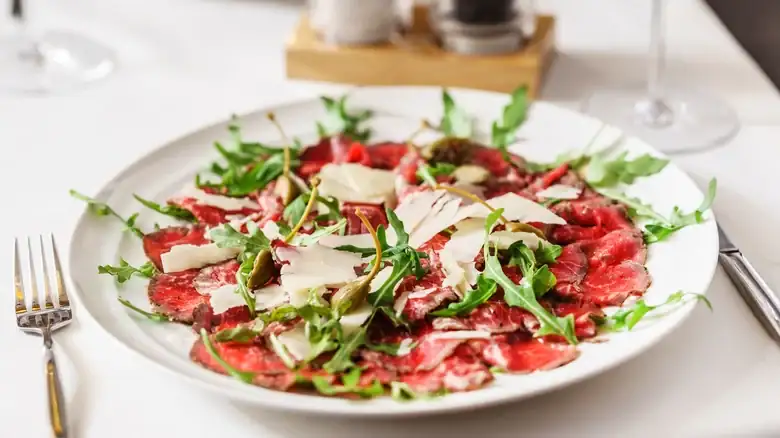
La clave para cortar carpaccio de ternera en láminas finísimas en casa
El carpaccio es un manjar italiano muy apreciado, famoso por sus delicados sabores y, sobre todo, por su refinada presentación. Es el tipo de plato que muchos disfrutamos en restaurantes de alta cocina, donde chefs altamente capacitados emplatan con maestría hermosas presentaciones adornadas con tiernas verduras, hierbas aromáticas y quesos intensos. Es tan sencillo, pero parece tan elegante. Y no es de extrañar, dada su popularidad.
Carpaccio is a beloved Italian delicacy renowned for its delicate flavors and, most important, refined presentation. It's the kind of thing many of us relish in fine dining establishments, where highly trained chefs skillfully plate beautiful presentations garnished with tender greens, fragrant herbs, and pungent cheeses. It's so simple, but it seems so elegant. And it's not a wonder, given its pedigree.
The famed antipasti first appeared at Harry's Bar, a legendary (still-extant) restaurant in Venice. As the story goes, restaurateur Giuseppe Cipriani created the dish for the Countess Amalia Nani Mocenigo, whose doctor instructed her to avoid cooked meats. Cipriani named the bright-red dish of raw beef after famous Italian Renaissance painter Vittore Carpaccio, who was known for employing bold colors in his paintings, including excessive use of the color red.
But its red color is only part of the proof the beef is ready to be enjoyed. To serve flawless beef carpaccio, you must achieve those perfectly thin slices. And as it turns out, it's easy enough to recreate this culinary experience at home. The key to making paper-thin beef carpaccio in your own kitchen is freezing your high-quality beef tenderloin before slicing.
Cutting beef carpaccio at home
Buying meat for homemade beef carpaccio isn't too different from buying meat for homemade steak tartare. It all starts with buying a high-quality cut of beef tenderloin from a reputable butcher. When you get it home, remove it from the packaging and wrap it tightly in cling wrap to help it maintain its original shape. Ina Garten's pro tip for super-thin shaved steak involves popping it in the freezer for 15 to 20 minutes. Other cooks go closer to 30 minutes.
Either way, the goal isn't to freeze it. It's to make it very cold. Taking it to a lower temperature firms up the fat inside the beef, making the entire cut easier to slice with a good, sharp knife. Scientifically, ice crystals also form inside the muscle fibers to make it more difficult to tear under pressure.
If you don't have a sharp enough knife or for some other reason are still unable to get paper-thin slices when cutting the frozen tenderloin, you can always place the slices between to pieces of parchment paper and gently pound it with a meat mallet for the desired thickness. Once you've mastered beef, a carpaccio-style cut can be applied to anything from fresh tuna to pickled beetroot or portobello mushrooms.