Antes del cóctel de camarones, otro marisco era la opción más popular
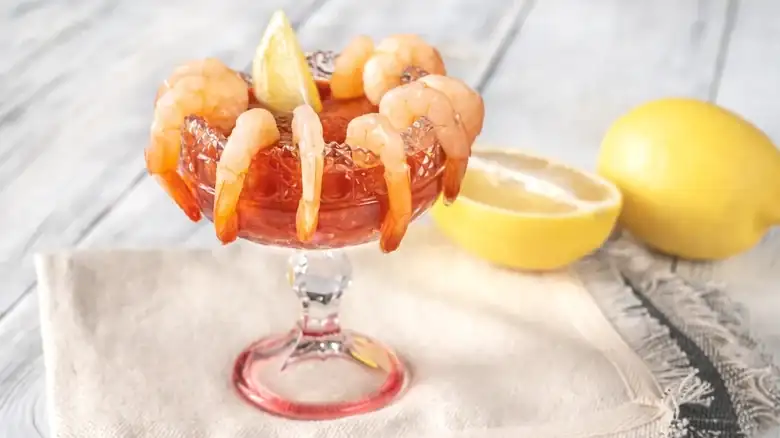
Un delicado anillo de camarones colocado con cuidado alrededor del borde de una copa de martini (o de helado), dentro de la cual hay una salsa roja brillante y picante.
A delicate ring of shrimp set gingerly around the brim of a stemmed martini (or sundae) glass, inside which is a bright red, tangy sauce. For such a simple dish, the shrimp cocktail has what you might call staying power, as it has thoroughly ingrained itself in dining culture since its creation, and has even served as a sort of unofficial dish of Las Vegas casinos for quite some time. And while these days, most talk surrounding shrimp cocktails is in relation to maximizing the sauce's flavor, such as in whipping up a quick but delicious three-ingredient cocktail sauce, or in mixing an interesting lingonberry cocktail sauce, a quick look back in time reveals that there was once a much larger change that took place pertaining to this dish.
For a not-insubstantial amount of time, a number of years before shrimp ever graced these sauce-filled glasses, fresh oysters were actually the seafood of choice for this unique dish. Oysters were something of a trendy food back in the late 1800s heading into the 1900s, and a story arises around this time of someone having created a "drink" involving shucked oysters and what appears to be a proto-cocktail sauce. It didn't take long for lemon to get into the mix, since it's such a great addition to oysters -– and before you know it, the oyster cocktail began to gain steam. So next time you sit down with that picturesque ring of shrimp, just remember that it was not always that way.
Oysters eventually gave way to shrimp
If oysters were at the center of a craze, and if the original cocktail sauce was made to facilitate an oyster cocktail, then you might find yourself asking why you have shrimp cocktails now instead of oysters, if they were apparently such a good match. The answer is twofold, but is actually rather simple once you break it down. Like all crazes, the oyster boom eventually died out across America, as pollution and other factors led to a declining population in oyster beds, and subsequently a rise in oyster prices. An unfortunate reality, but hey, all good things must end, and this was true about oysters' expansive popularity.
However, there's one other factor that you have to consider here. While this decline in both supply and demand of oysters was transpiring, the shrimp business really started to get rolling. It had previously been difficult to get shrimp far inland, especially compared to oysters. But ever-improving fishing, freezing, and shipping technologies meant that, before long, shrimp could fill the void left by oysters. This was certainly true of the "cocktail" in question, as shrimp virtually replaced oysters as the go-to shellfish to serve alongside the signature sauce. And while "fresh" shrimp may be a bit of a slippery term at some places, it seemed that once shrimp overtook oysters as the cocktail seafood of choice, there was no looking back.