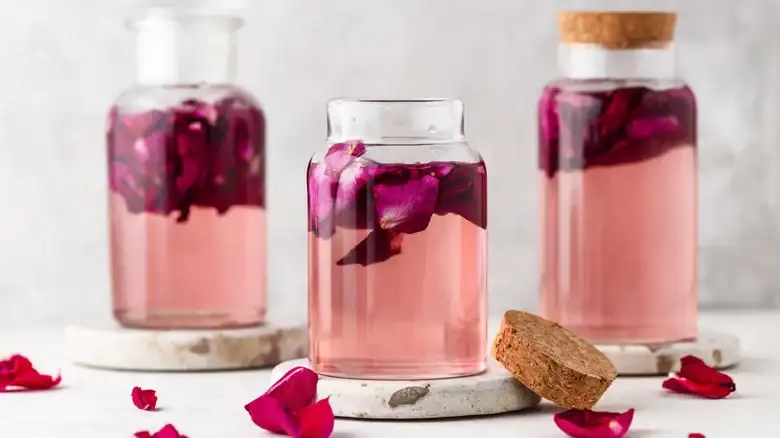
How To Use Rose Water In Cooking
If you're a regular viewer of television cooking competitions, there's one ingredient you've probably learned to be afraid to using: rose water. During the preparation segments of the show, the judges walk by, see rose water at a contestant's station, arch their eyebrows, and caution the contestant to be judicious.
Rose water was first distilled from the petals of the Damask rose in Persia during the Middle Ages –- a byproduct of the process to capture the rose's essential oils. Although initially used for cosmetic purposes, Persians soon discovered the slightly sweet, floral flavor it could add to both sweet and savory dishes. Since then, it has been a staple of Middle Eastern cooking, where it is used for everything from Turkish Delight and baklava to Moroccan tagines and cookies. In Southeast Asia, cooks add it to soften milky and creamy desserts and beverages.
Add sweet floral notes to sweet and savory dishes
Rose water eventually made its way to other cultures, and it is now widely used in celebratory desserts. In Spain and Italy, rose water is an ingredient in nougat – a confection made with almonds, honey, and egg whites, eaten to celebrate Christmas. It also brings a floral note to rabdi, which is served with one of the oldest desserts in the world, malpua, to celebrate the Indian holiday Holi. In Mexico, rose water brings another dimension to pan de meurtos, an iconic treat that celebrates the Day of the Dead.
In day-to-day cooking and baking, rose water can be used in a number of ways. Given its Middle Eastern roots, it is no surprise it can be used to balance strong spices like saffron. It provides a depth to more mellow flavors, like pistachios or honey. Bakers like to use a half teaspoon of rose water to soften the often sugary flavor of frosting and icing. It can offset the tanginess of jams and compotes made with tart strawberries, raspberries, and rhubarb. It also works well in simple syrups and hot and cold beverages like tea, lemonade, cocktails, and mocktails. It can even be used as a replacement for vanilla extract.
Again, you don't need very much rose water to balance flavors. Recipes generally call for no more than a half or full teaspoon, and, at times, a dash is all you need. Using too much can be a thorn in anyone's side.