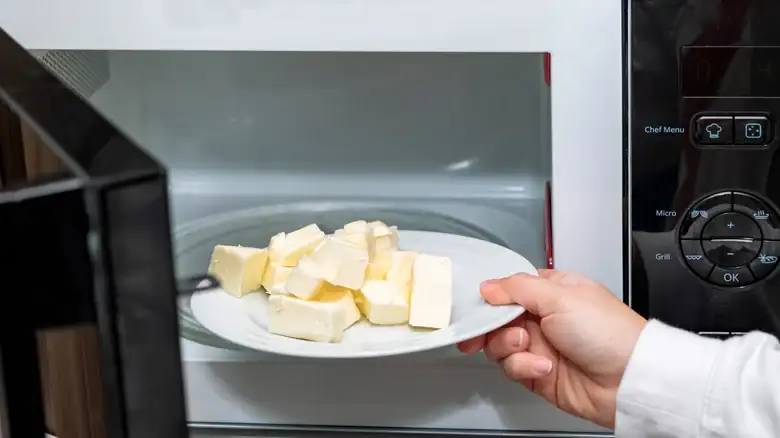
How To Melt Butter In The Microwave Mess-Free
Whether you're using it with seasoning blends to transform your popcorn or as a dipping sauce for a succulent lobster tail, melted butter can be a bit of a pain to get right.
First, cut your butter into smaller chunks. This will help the butter melt more evenly as more of its surface is exposed to the heat, and there is less density to penetrate through. Once the butter is cut and placed in a microwave-safe bowl, you can cover it with a paper towel or the paper butter wrapper (unless it's foil wrapped, like Kerrygold butter sometimes is) for extra protection from pops and explosions.
Now, the moment of truth and the time to start using your microwave's power level button. To melt your butter, put it in for 30 seconds at 40 percent power. Usually, you can change the power level on your microwave after inputting the cook time and selecting the power level button, with a single number corresponding to the power level; for example, 40 percent would be 4. Setting a lower power level will prevent the butter from being hit with a constant barrage of the microwave's full power, allowing it to gradually melt without overheating and exploding. After the first round, you can stir the butter and put it in again for another 10 to 30 seconds, depending on how much is left unmelted.
Melt your butter low and slow
The key to melting butter in the microwave is to take things slow and keep the power low. Butter explodes when it's melting because, as it heats, the water and milk fats start to separate. When it gets too hot, the water converts to steam and builds pressure on the fat, which eventually ruptures, causing a messy explosion. Setting your microwave to a lower power level prevents things from heating up too quickly, while the short cooking periods prevent pressure from building up. Likewise, stirring between intervals can help release steam and lower the chances of popping.
Now, if you can't change, or don't want to change, your microwave's power level, you can melt butter at full power, but you'll need to be extra careful. You'll want to cover the bowl you're melting it in and only heat it in 10-second intervals, stirring between each one. The stirring will help the residual heat from the melted butter soften any solid parts. Although lowering the microwave's power level is the best way to prevent messy explosions, so long as you are diligent, you can get similar results with a full-powered microwave.