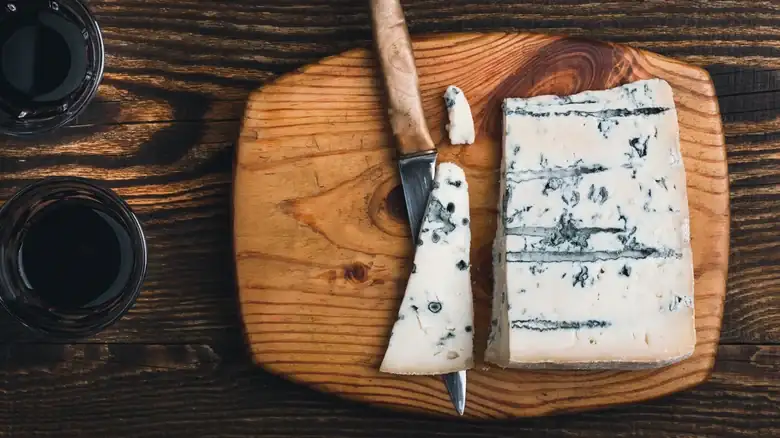
Blue Cheese Vs Gorgonzola: Here's The Difference
Love it or hate it, blue cheese never leaves you indifferent. Often underappreciated, it's one of those things that has the world divided, just like cilantro or pineapple on a pizza. But it probably never even crossed your mind that blue cheese and Gorgonzola are two different cheeses.
And while Gorgonzola may seem like one of the best substitutes for Roquefort or a creamy and nutty Stilton (any of which could be the unexpected ingredient that gives peanut butter sandwiches a fancy twist), it doesn't quite have the same traits as them. They might work interchangeably in certain recipes, but eating them fresh is a whole different story when you take into account their texture, flavor, aroma, intensity, and ultimately their place of origin. And let's not forget the hit Gorgonzola could take on your wallet.
What is blue cheese?
You can find dozens of blue cheese varieties out there. While no two varieties are identical and every type has its own distinct qualities, the general impression is that blue cheese is complex, sharp, and either creamy or crumbly with an umami aftertaste as an extra bonus. In terms of aromas, it mainly has deep, earthy notes with a bit of mustiness. Most blue cheeses also go through aging, and that adds to their complexity and flavor profile. Some become light and buttery, and others turn more intense and salty. This makes blue cheese ideal for dressings, salads, cheese boards, and an even greater addition to burgers and steaks. Whether it's that rich and creamy Stilton from earlier, Denmark's mildly sharp and slightly bitter Danablu, or even Spain's delightfully tangy and ridiculously expensive Cabrales, there's really something for everyone's palate.
What unites all blue cheeses around the world is the Penicillium mold responsible for their distinct blue marbling. Naturally, you might wonder if blue cheese is actually mold, why is it safe to eat? But there's really nothing to worry about, as the strains used for making blue cheese (usually Penicillium roqueforti or Penicillium glaucum) do not produce any mycotoxins. They do, however, elevate both the cheese's taste and texture.
What is Gorgonzola?
Native to Italy's Piedmont and Lombardy regions and named after the place it was first produced in, Gorgonzola dates back to the 9th century. This delicious, soft cow's cheese gets its pale yellow color and signature blue-green veins thanks to the Penicillium glaucum used in the production process. It comes in two main varieties depending on how long it's aged. Gorgonzola dolce is aged 50 to 150 days and is sweet, creamy, and buttery. Gorgonzola piccante is aged 80 to 270 days and is spicier and crumblier.
Because the two differ in texture, they naturally have different applications. Gorgonzola dolce is meltable, which makes it a great pizza topping or a rich addition to risotto and pasta. Meanwhile, its firmer counterpart is perfect for salads or any other dish that needs cheese broken into crumbles. Compared to other blue cheeses, Gorgonzola has a milder aroma. That said, it doesn't mean it comes without some funkiness. If you're not a fan, however, some honey or a spoonful of jam should help tone it down. You'd be amazed by the dimension this pairing adds to its flavor. If you're a wine lover, don't hesitate to pair it with full-bodied reds such as Malbec — that can take your Gorgonzola experience to the next level.