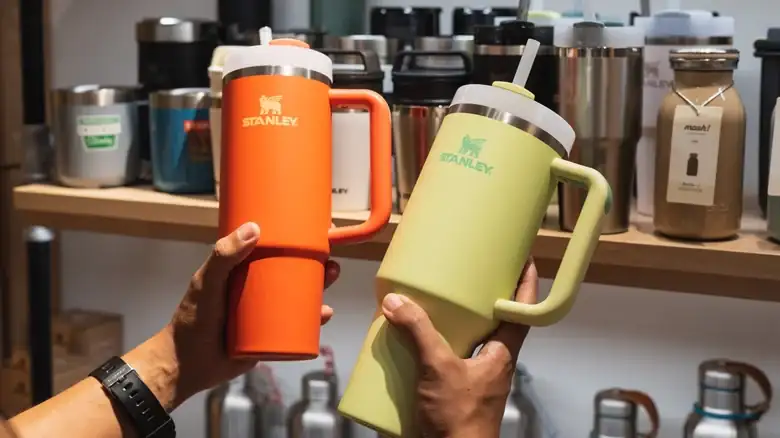
Do Stanley Cups Really Have Lead In Them? What To Know
For many water drinkers and undercover Diet Coke enjoyers, Stanley cups are a must-have. They are large, hefty, and vacuum-sealed to maintain coolness of your drink.
Several Stanley devotees have posted to social media, indicating that the cups have come up positive for lead in at-home tests. So, should you toss your Stanley? Well, probably not. Stanley posted a response to its website, noting that its products do contain lead. However, according to the statement, the lead is "...covered with a durable stainless-steel layer, making them inaccessible to consumers." The lead is added as a form of its vacuum-sealing process and, if your cup is not damaged, should be covered by an exterior shell. The customers who found lead were using a damaged cup, wherein the lead pellet is exposed. The pellet can be found at the bottom of the water bottle. For this reason, you should dispose of any damaged Stanley products.
What to know about lead
While it is perfectly safe to drink from an undamaged Stanley cup, some still see the internal lead content as a completely avoidable risk. After all, lead exposure is incredibly serious. Even a small exposure to lead can be risky, especially for children, as it can cause a decrease in cognitive function and increase in behavioral issues. In adults, lead exposure can lead to issues with blood pressure. For this reason, it is important to be mindful of lead content in and around your home. Though you probably shouldn't worry about the lead content of your (undamaged) emotional support Stanley cup, there are some products in your home that may contain lead.
Other food products, such as cookware, dark chocolate, and popular cinnamon and spice brands have been found in the past to contain lead. Even Lunchables came under fire for its children's meals containing lead. Luckily, a t-home lead testing swabs are relatively accurate at testing for the metal, so if you have a question regarding an item, including your Stanley, you can test for lead yourself to ensure a product's safety.