¿Es seguro meter poliestireno expandido en el microondas?
Sin importar tu uso personal ni tu opinión, hay que admitir que los microondas son un utensilio de cocina realmente revolucionario.
No matter your personal use and opinion, you gotta admit microwaves are a pretty revolutionary kitchen tool. The appliance makes warming things up possible in minutes, changing the leftover game forever and helping you easily reheat that cup of coffee you forgot about (though, if you should microwave coffee is another story).
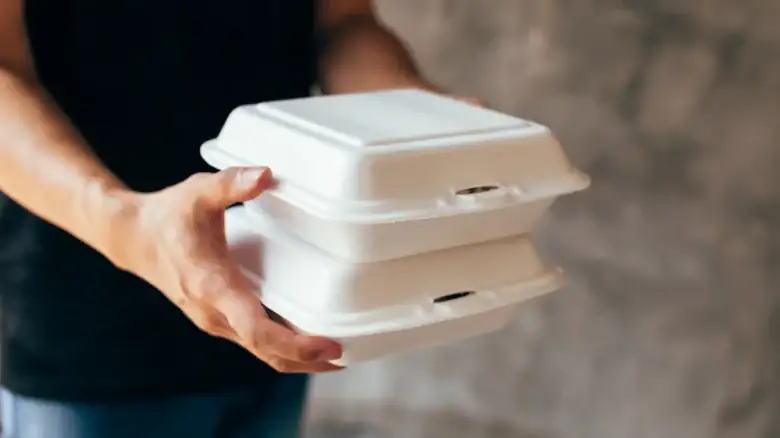
But like anything culinary, there are dos and don'ts and best practices galore worth knowing when microwaving. There are certainly some hard and fast rules when it comes to things you shouldn't microwave, from reactive substances to foods or drinks that won't fare well in the appliance. Then there's the murkier, gray area — the things most of us have probably put in the microwave a time or two despite not really being sure if we should have or not. For one? Microwaving plastic, or especially Styrofoam. Is it dangerous, unhealthy, or perfectly safe? If you're looking to quickly nuke that leftover takeout in a Styrofoam container, do you really need to transfer the contents into another container first?
The answer largely depends on the type of Styrofoam and how long you're heating things up for. If you're just zapping something for a few seconds, you might be able to get away with it. But longer heat times can deteriorate the substance, allowing it to leach into your food. And with chemicals in Styrofoam like styrene being classified as possible carcinogens, this is far from ideal. There is a type of microwave-safe Styrofoam container marked with a symbol featuring the appliance with wavy lines, but it may be best to just put your leftovers on a plate anyways.
Best practices for reheating food
Microwaves are a game changer for busy cooks and foodies. You can prepare everything from rice to pasta if done properly. Some people have avoided using microwaves though, or at least give them a side eye, whether because they aren't completely comfortable with the countertop appliance or sure of its safety. In the most basic sense, microwaves work simply by the use of microwaves, a cousin of radio waves, which penetrate food and vibrate the water molecules inside of it, creating heat and thus cooking it. They've been regulated by the FDA since 1971 and became a staple in most home kitchens about a decade after.
To play it safe when microwaving food, it's typically best to avoid putting Styrofoam in the appliance — especially if the container has any signs of damage like cracks, or has been microwaved before already. Use a microwave-safe container when in doubt, such as a glass or ceramic dish clearly marked for the purpose. Paper is also usually a safe bet — like wrapping a piece of pizza in a paper towel or placing food on a napkin. Just remember to keep things like metal out of the microwave — no tin foil, utensils, or metal containers. After all, if you ever feel unsure about microwaving a takeout container, there's nothing wrong with transferring your food to another vessel.