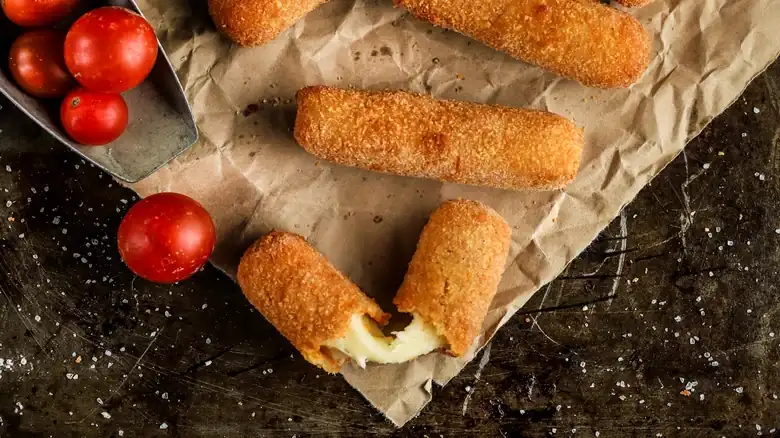
Por qué deberías evitar pedir este popular aperitivo en los restaurantes italianos
Es difícil equivocarse con una cena en un restaurante italiano. El menú casi siempre tiene algo para todos los gustos, y la pasta fresca, el pan casero y las milanesas de pollo son algunos de los platos más reconfortantes que existen.
It's hard to go wrong with a night out at an Italian restaurant. The menu almost always has something everyone likes, and fresh pasta, house-made bread, and chicken cutlets are some of the best comfort foods out there. Still, there are some menu items to avoid in fine Italian restaurants — primarily, those with Italian-American roots as opposed to true Italian origins. And sadly, mozzarella sticks top that list.
The concept of a mozzarella stick was first invented in France, but the mozzarella sticks we know today come from none other than America's cheese capital, Wisconsin. Not only are they not authentically Italian, but you shouldn't order them from an Italian restaurant because there's a good chance they won't be made fresh. Chefs in authentic Italian restaurants take pride in their dishes prepared to order, and they put more love into those true-to-Italy foods like traditional fettuccine Alfredo (hold the heavy cream, please) and cacio e pepe.
"I have the cynical view that most restaurants are just buying frozen breaded mozzarella sticks and throwing them in their deep fryer," chef Sedona Kusler of Portland's Montelupo told Eat This, Not That! And in that case, you're better off not paying for them.
Look for signs of house-made mozzarella sticks or order something else
If you can't get your mind off of mozzarella sticks, go ahead and order them, but look for distinctions that suggest whether or not they were made fresh in-house, so you know for next time. You can certainly ask your server, but you can also look at the color, texture, shape, and ingredients. If they're slightly misshapen, that's a sign they were made by hand. If the breading is slightly inconsistent throughout, then they were likely breaded by hand, too. Fresh mozzarella should be a milky white color, so take a look at the inside of the mozzarella stick once you bite into it. And if mozzarella sticks are made with unique ingredients, like batter rather than breadcrumbs or Panko breadcrumbs over basic seasoned breading, they're also probably made in-house.
Mozzarella sticks might not be native to Italy, but there is another cheesy mozzarella dish that is: mozzarella in carrozza, which is almost the same thing. But instead of a stick, it's a fried mozzarella sandwich. It originated in Naples back in the 1800s, and it's not uncommon to find it in the appetizer section of traditional Italian restaurants. Another way to get your fried cheese fix is to order eggplant rollatini, which is lightly fried eggplant rolled with warm cheeses like ricotta and mozzarella. It originated in Italy's Puglia region.