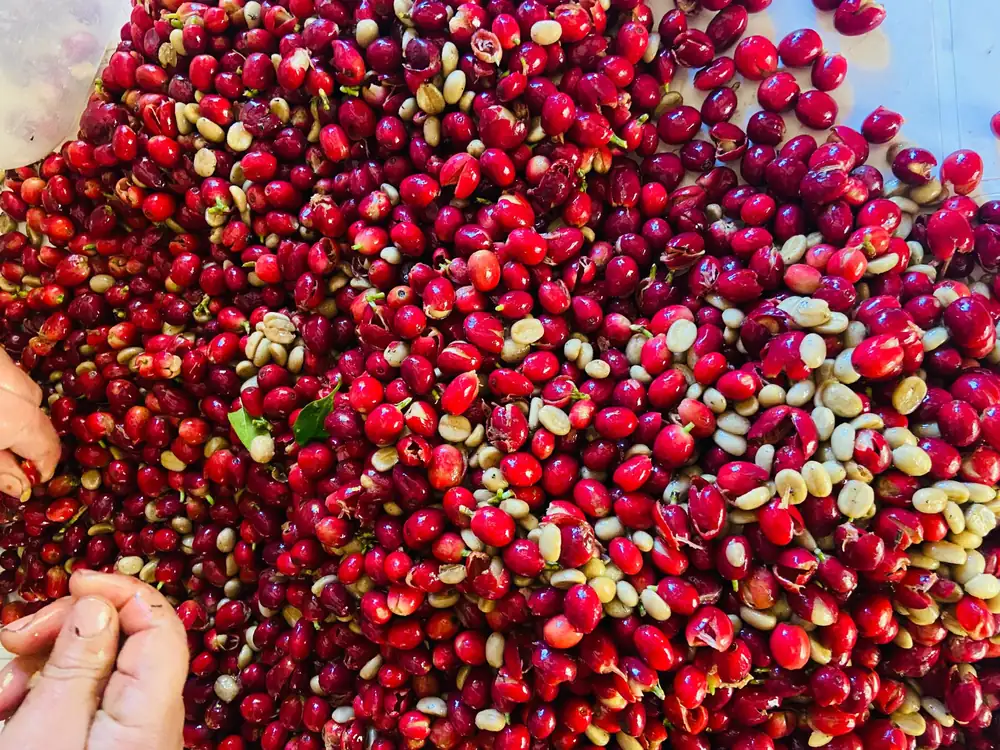
Coffee cultivation is experiencing a revival in Argentina
Argentina has been quietly expanding its presence on the world coffee map by investing in Arabica cultivation in at least five of its provinces.
In Tucumán, the municipal government launched a program in September focused on agricultural diversification, targeting nurseries and about 30 producers to establish crops of bourbon and gesha varieties. In parallel, Misiones is conducting pilot trials of coffee planted in agroforestry systems with Arabica cultivars.
But coffee already has a history in the country. Records indicate cultivation in Tucumán as early as the 1880s. In the 1970s, a state program encouraged its planting in agroforestry systems in Salta, Jujuy, and Misiones, but in the 1990s, Argentine coffee plantations were abandoned.
Now, climate change is altering the agricultural map and allowing coffee cultivation to be tested in small subtropical areas. According to a September report in Clarín, the resurgence of coffee farming is seen by the government as an opportunity to generate rural jobs and, in the long term, as a way to reduce dependence on imports—in 2023, the country spent US$109 million to import coffee from Brazil, according to the OEC (Observatory of Economic Complexity). Also according to the newspaper, the only coffee currently planted and marketed in the country is Baritú, produced in the yungas (dense and humid forests) of Orán, north of Salta, and sold in two local coffee shops.
Despite being in its early stages—with reduced volume and still uncertain harvest regularity—the movement is gaining relevance. Argentina projects having 8,000 hectares of coffee in Tucumán and the surrounding areas within a few years. Among the challenges are genetic selection adapted to the new terroir, post-harvest management, and building a value chain for specialty coffees.