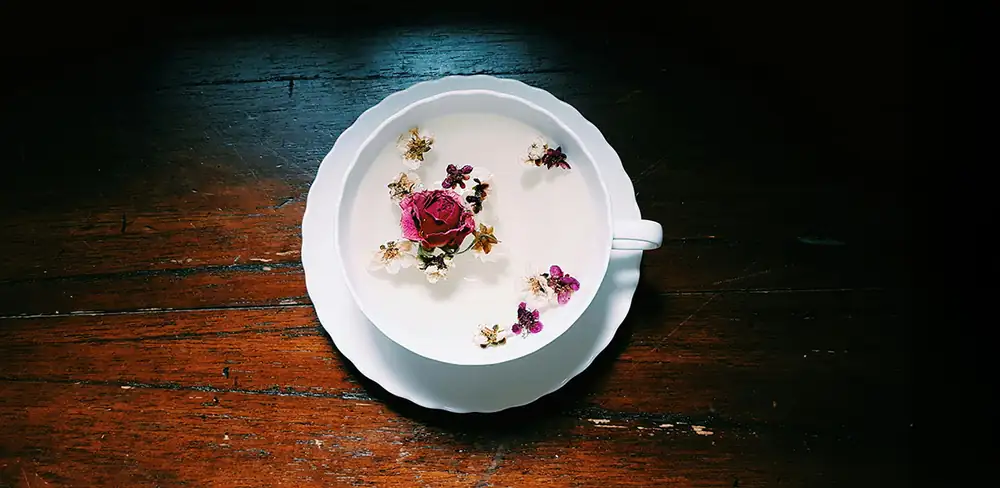
Tea’s time to shine: The rise of brewing innovation
Tea time is now about fruit-forward infusions, inventive hot or cold flavours and ‘camera-ready’ service.
“One of our best-selling in-room products this year has been semi-skimmed milk in mini retro-style glass bottles, which we’ve also recently launched in a plant-based oat milk range.”
Given that the first ‘proper’ Italian expresso machine – a Gaggia, since you ask – was installed in a Soho café as early as 1953, the UK’s coffee culture didn’t emerge overnight. These things take time, and tea’s moment to shine in the same way may finally be upon us.
For every out-of-home venue that still feels they can get away with a box of tea bags and a kettle, there are others that offer a choice of black tea varieties, green tea and fruit and herbal blends, as well as on-trend serves such as chai and matcha.
Dan Graham, managing director of Birchall Tea, says: “For years, tea has largely been bought out of habit. We think more people are beginning to ask the same questions they ask about coffee: where was it grown, who produced it and what makes it special? That’s an exciting shift for the category, because great tea has an incredible story to tell.”
Sophie Steenberg, co-founder of supplier Steenbergs, believes that tea has become far more than a standard breakfast brew. “That shift is creating a real opportunity for hospitality businesses to rethink their tea offer in the same way they’ve elevated coffee and wine. People increasingly want choice, but they also want quality and authenticity,” she says.
“We also see tea becoming part of a broader wellbeing ritual, where guests choose different teas to suit different moments of the day, rather than simply asking for ‘a cup of tea’.”
Ease gives tea a unique appeal, says Annabel Towell, commercial development manager with sales and marketing consultancy FusionFSM. “From an operational perspective, tea remains one of the simplest hot beverages to serve, requiring minimal training or equipment while delivering attractive cash margins. That means operators can introduce a broader, more premium range without increasing complexity in the kitchen or front of house,” she says.
“Ultimately, the category is evolving from offering customers a choice of flavours to offering them a choice of occasions and benefits.”
Jenna Horsnell, UK marketing manager of Miko Coffee, which distributes Birchall and Bellevue teas in foodservice, agrees that tea is enjoying increasing popularity: “Across the hospitality businesses we work with, operators are devoting more menu space to premium and speciality tea serves as they respond to changing consumer expectations.
“We’re also seeing afternoon tea continue to evolve. While the traditional experience remains popular, operators are increasingly introducing contemporary twists through globally inspired teas, wellness-focused menus and creative tea-based drinks that appeal to a broader demographic. It’s a great example of how tea can help businesses create memorable experiences while generating additional revenue beyond the traditional tea occasion.”
Specialist hotel supplier Out of Eden offers 14 different brands of tea and reports growing demand for premium and regional speciality ranges, alongside classics such as Tetley and PG Tips. Black tea with milk is the most popular way of serving tea, so the type of milk and way it is served matters too, says Claire Armstrong, sales manager: “One of our best-selling in-room products this year has been semi-skimmed milk in mini retro-style glass bottles, which we’ve also recently launched in a plant-based oat milk range.”
There is clearly a younger demographic driving diversity in the out-of-home tea market. Rhia Harry, Bidfood research and insights manager, says that according to Bidfood’s 2026 Food and Drink Trends consumer survey: “Traditional favourites such as English and black teas remain popular at 59%, but tastes are clearly shifting. Iced tea is climbing in popularity, particularly among students, rising from 27% overall to 47% in that group.
“Bubble tea is also capturing the attention of younger consumers, appealing to 42% of students compared with 19% of the general population, while matcha is on the rise at 27% among younger drinkers.
“Tea is stepping beyond its traditional comfort zone. Popular options include iced teas, fruit teas, bubble teas, chai tea, matcha, sparkling teas and teas with functional benefits such as collagen tea. Dessert-inspired flavours, such as biscuit- and cake-infused teas, are especially popular with 16- to 34-year-olds.”
Aimia for Professionals supplies Dorset Tea, the Tea India range of flavoured chai tea bags, and Drink Me Chai’s spiced chai and matcha chai blends. Rebekha White, senior brand manager, says: “Cold teas are becoming an increasingly popular choice for customers. From fruity iced teas to chai lattes, Gen-Z customers in particular are now choosing to enjoy drinks typically served hot, over ice.
“Matcha, recognised for its Instagram-appeal, has become an ideal way for operators to upsell teas through extras such as syrups, alternative milks and cold foams.”
Bubble tea also appeals visually to Gen Z customers, who share images of their drinks on social media, says John Laughlin, operations director for Sephra Europe. “Directly sourced from Taiwan, our base jasmine tea syrup contains tea extract, so it delivers both in flavour depth and floral character. It’s a practical, ready-to-use solution that doesn’t call for any brewing equipment, training or excessive staff time.”
Frances Musgrave, tea sourcing manager at Finlay Beverages, says that while Gen Z hasn’t fallen out of love with tea, they are “rewriting the rules of the traditional brew”.
“Younger consumers are more likely to look beyond black tea and experiment with fruit, and herbal alternatives that offer novelty and value-added functionality,” she says. “Digital engagement, user-generated content and trend-led limited edition drinks can also help operators connect with Gen Z. Social media is increasingly shaping demand, with younger consumers embracing a ‘camera eats first’ mindset and seeking drinks that are as visually appealing as they are enjoyable.”
As Greg Harvey, out of home sales controller with Yorkshire Tea supplier Taylors of Harrogate, concludes: “Tea is evolving, and while the traditional brew remains at the heart of the category, one of the biggest opportunities is extending tea beyond the traditional hot-drinks occasion.”
Yorkshire Tea has embraced cold-brew, with lemon and peach and raspberry iced varieties. Harvey adds: “For venues looking to drive incremental sales, iced tea provides another reason for customers to choose tea throughout the day, whether as a lunchtime refreshment, an afternoon pick-me-up or a soft drink alternative. Served over ice with a slice of lemon, it’s a modern take on tea that complements – rather than competes with – a traditional brew.”