How wine is made: the invisible stages from grape to glass
Understanding how wine is made allows you to read a glass of it in a different way. Behind every sip are technical decisions, controls, and standards that organizations like the International Organisation of Vine and Wine coordinate globally to guarantee the quality and safety of what reaches the table.
However, for those who don't work in a winery, the interior of the stainless steel tanks, barrels, and bottling lines remains a hidden world. Knowing that grapes are transformed into wine isn't enough; understanding exactly what happens during that transformation is key to interpreting the character of each bottle.
From here, we will go through the entire process step by step to understand in a simple and rigorous way how wine is made in a modern winery, from the harvest until the bottle is sealed and ready to go to market.
From grape to wine: basic context.
It all begins in the vineyard. Without healthy, ripe grapes, it's impossible to make good wine. The winemaker decides the harvest date based on several factors: sugar level, acidity, health of the grapes, and the desired wine style. In many cases, laboratory analyses and grape tastings are conducted to determine the optimal harvest time.
- Climate and vintage: influence the concentration of sugars and the natural acidity.
- Soil type: influences ripening and aromatic expression.
- Grape variety: each one contributes different structure, color and aromas.
- Harvesting method: manual or mechanized, day or night, depending on the winery's objective.
In quality harvests, manual harvesting is usually prioritized because it allows for the selection of bunches and prevents damaged or rotten grapes from reaching the winery, which could ruin the fermentation.
Warehouse reception and selection
The arrival of grapes at the winery is a critical moment in the winemaking process. Trailers or crates are weighed, samples are taken, and the grapes are unloaded into hoppers, from where they are conveyed to cleaning and sorting machines. Many wineries also incorporate tables where leaves, unripe bunches, or damaged berries are removed.
The objective of this phase is clear: that only suitable raw material, without foreign bodies and with the appropriate level of maturity for the style of wine to be produced, reaches the crushing phase.
Main stages of how wine is made
- 1. Crushing and destemming: the birth of the must
Once selected, the grapes pass through the destemmer, which separates the stems (the woody part of the bunch) from the berries. Then, the crusher gently breaks the skin to release the juice without excessively crushing the seeds, as this could impart bitterness.
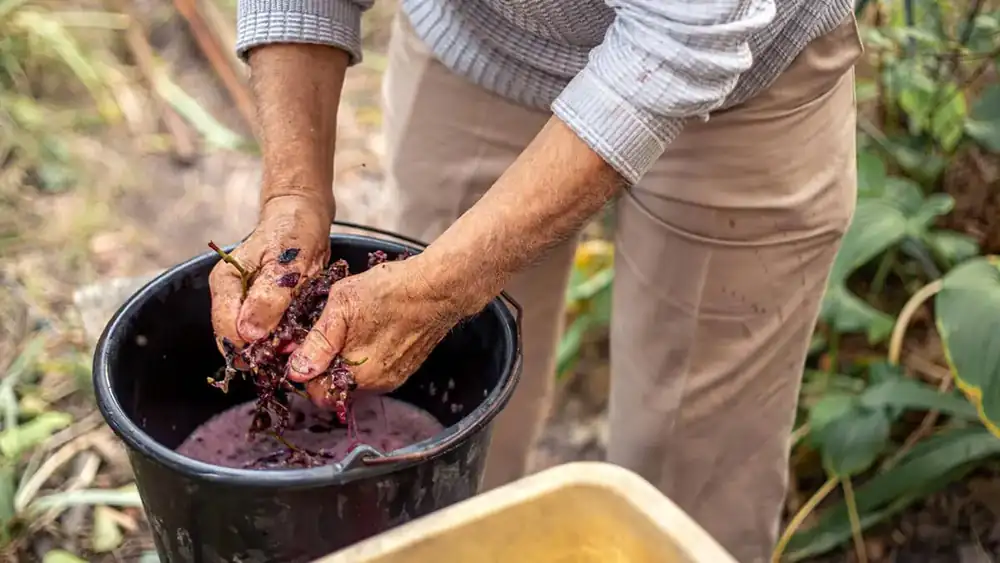
The result is a mixture of skin, pulp, seeds, and grape juice called must or crushed grapes. In white wines, the grapes are usually pressed earlier in the harvest to quickly separate the clear must from the solids. In red wines, however, contact with the skins is maintained to extract color, tannins, and aromas.
- 2. Maceration and alcoholic fermentation
This stage is where the key transformation of the process occurs: the yeasts convert the sugars in the must into alcohol and carbon dioxide. Grapes naturally contain yeasts on their skins, although many wineries use selected yeasts to have greater control over aromas and microbiological safety.
What to see in Sallent de Llobregat: 10 unique essentials
During alcoholic fermentation, temperature control is essential. Higher temperatures favor the extraction of color and tannins, and are therefore common in structured red wines. Moderate and low temperatures help to better preserve delicate aromas, which is fundamental in white and rosé wines.
These ranges are guidelines: each winemaker adjusts times and temperatures to enhance the aromatic profile they seek and ensure that the sugar is completely transformed into alcohol, leaving a dry wine or one with the desired level of residual sugar.
- 3. Malolactic fermentation and resting
In many red wines, and in some structured white wines, malolactic fermentation takes place after alcoholic fermentation. In this phase, lactic bacteria transform malic acid (which is more aggressive) into lactic acid (which is milder). The result is a wine with a more rounded acidity and greater microbiological stability.
This second fermentation can take place in steel tanks, concrete tanks, or directly in wooden barrels, depending on the desired style of wine.
- 4. Aging in tank, barrel or bottle
The next step in understanding how wine is made is aging. Not all wines are aged in wood, but all need a minimum resting period to stabilize. In young wines, this resting period can take place in stainless steel or concrete tanks, which best preserve the fruit.
When greater complexity is desired, the wine spends time in oak barrels. The wood provides micro-oxygenation and compounds that introduce notes of vanilla, spices, toast, or smoky nuances. Depending on the time the wine spends in barrel and bottle, it is classified as a young wine, crianza, reserva, or gran reserva, according to the regulations of each appellation of origin.
- 5. Clarification, filtration and stabilization
Before bottling, the wine must be clear and stable. Clarification involves adding substances that bind to suspended particles, causing them to settle to the bottom of the tank. Afterward, it is filtered to remove fine solids, and stabilization techniques are applied to prevent precipitation or cloudiness in the bottle.
In this phase, the level of sulfur dioxide, an authorized preservative that protects against oxidation and microbiological contamination, is also adjusted, always within the limits set by current regulations.
- 6. Bottling and sealing
The final visible step in winemaking is bottling. The wine is conveyed through sanitized pipes to the filling line, where contact with oxygen is minimized using inert atmospheres. The closure is then inserted: natural cork, agglomerated cork, technical cork, or screw cap, depending on the winery's strategy and the type of wine.
The dark color of many bottles is no accident. The glass protects against light, which can alter aromas and accelerate oxidation. Once bottled, the wine can continue to refine itself in the bottle for months or years, depending on its structure and aging potential.
Differences between how red, white and rosé wine are made.
The distinctive feature of red wine is that the must ferments in the presence of skins and, sometimes, seeds.
Red wine: color and structure from the skins.
During maceration, the pigments from the grape skins dissolve into the wine, imparting color ranging from ruby hues to violet or almost black tones. At the same time, tannins are extracted, which are responsible for the astringency and contribute to the wine's aging potential.
In light red wines, maceration can be brief, while in wines intended for aging, contact with the skins is prolonged to achieve more body and structure. Techniques such as pump-overs or punch-downs help to mix the solids with the liquid and extract the juice evenly.
White wine: purity of the must and aromatic freshness.
In white wine, on the other hand, the priority is preserving freshness and fruity or floral aromas. Therefore, after harvesting, the grapes are quickly pressed and the must is separated from the skins before fermentation. Fermentation takes place at moderate or low temperatures in order to retain volatile aromatic compounds that would be lost at higher temperatures.
Some white wines are aged on fine lees, that is, on the dead yeast cells that settle at the bottom of the tank. Keeping the wine in contact with these lees and stirring them periodically adds volume to the mouth and a creamier texture.
Rosé wine: a bridge between white and red.
To understand how rosé wine is made, imagine a red wine with a very short maceration time. The red grapes are crushed and left in contact with the skins for only a few hours. When the must has reached the desired pink color, the liquid is separated and fermented like a white wine, at controlled temperatures and without the skins.
The result is wines of pale or intense color depending on the maceration time, with aromas of fresh red fruit and a lighter structure than many reds, but generally somewhat broader than that of a young white.
How to taste wine by understanding its production
Color offers clear clues about how wine is made. A deep, intense red usually indicates long maceration and high extraction. A very pale white suggests early-harvested grapes or minimal oxidation, while golden hues can indicate high maturity, barrel aging, or several years of bottle aging.
Aromas and taste: the winery's signature.
The primary aromas are reminiscent of fruit, flowers, or herbs and come directly from the grape and its ripening. The secondary aromas are related to fermentation: notes of bread, mild dairy, or hints of yeast. The tertiary aromas appear with aging in barrel and bottle, and evoke spices, nuts, leather, or balsamic notes.
When you understand how wine is made, those nuances cease to be abstract and become connected to concrete decisions: the type of grape, the maceration time, the fermentation temperature, whether or not barrels are used, and the aging period. Understanding the process not only satisfies curiosity; it also helps you choose each bottle better and enjoy it more consciously with every glass.