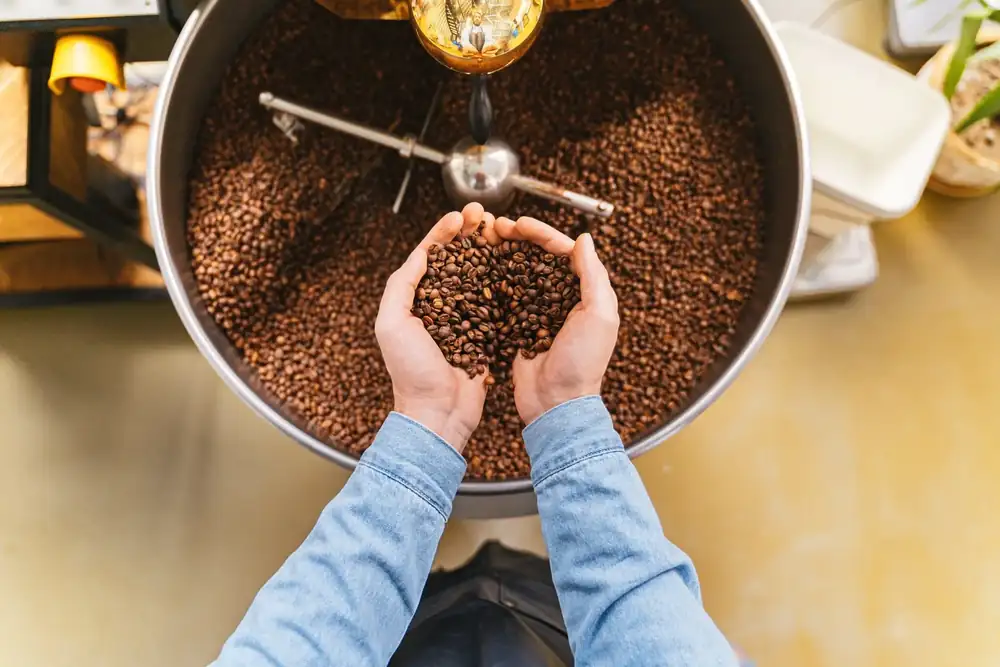
Barista José María Pellejero, in favor of coffee without sugar: “If you add it, it’s because the roasting is wrong”
Some people can't imagine coffee without sugar. And others have made specialty coffee their way of life and defend the opposite view with barista arguments.
Barista José María Pellejero, founder of a coffee brand and a certified trainer with the Specialty Coffee Association, has reignited the debate on social media. In a video shared online, Pellejero sums it up with a direct and clear statement: if you need to add sugar to your cup, it's because the roasting or the beans are faulty.
The debate is on, and as is often the case with coffee, every cup is different. Pellejero isn't alone in his crusade: the rise of specialty coffee in Spain has brought an uncomfortable question to the forefront for many breakfast lovers. Does good coffee really need sugar?
Why sugar can be a clue to a failed roast
The barista's argument is more complex than it seems. If you feel the need to sweeten your coffee, the problem might not be your taste, but rather what's in the cup. Low-quality beans or an over-roasted coffee can create a very pronounced bitterness. And sugar often only masks it.
Pellejero, who also teaches barista courses as an SCA-certified trainer, explains that a well-chosen and prepared coffee should be naturally sweet and acidic. This combination, far from needing sugar, is perfectly balanced on its own. The idea also has compelling logic: if coffee already contains its own sugars, why mask them with more?
The scientific explanation isn't magic or snobbery. The bitterness of coffee has a lot to do with the chemistry of the roasting process and how we prepare the cup. Therefore, before you reach for the sugar packet, it's worth considering two things: the coffee bean and the coffee maker.
A good roast doesn't require sugar: it requires water at the right temperature and a well-adjusted grinder.
Dark roasting and extraction: the real culprits behind bitterness
Coffee beans contain chlorogenic acid, a compound that transforms into lactones during roasting, which are responsible for a mild and pleasant bitterness. So far, so good. The problem arises when the roasting process is prolonged or too much heat is applied: phenylindanes appear, compounds that are much more bitter and persistent. Furthermore, dark roasting causes the sugars in the bean to caramelize completely, and with that, much of the natural sweetness disappears.
Preparation is also key. A grind that's too fine, water above 96 degrees Celsius, or an excessive extraction time can lead to over-extraction, which draws out the bitter compounds that should remain in the grounds. Experts recommend water between 90 and 96 degrees Celsius and adjusting the grind according to the brewing method: espresso, filter, or French press. This way, the cup doesn't depend on any added sugar to be enjoyable.
Specialty coffee: the way to enjoy without sugar
According to Pellejero, the alternative isn't to resign oneself to bitter coffee, but to choose better. Specialty coffee, certified by the Specialty Coffee Association (SCA), requires defect-free beans and a minimum score of 80 out of 100 in technical cuppings. This standard excludes practices like torrefacto, which adds sugar to the bean during roasting to darken it, ultimately resulting in a burnt flavor.
This type of coffee is usually made with select Arabica beans and shorter, more controlled roasts, designed to highlight fruity or floral notes rather than bitterness. So, if you want to train your palate, the path is simple: start with a good coffee, prepare it well, and give it a try without sugar.
At first you'll notice the difference; after a few cups, you might never want to go back. And if you fancy something sweet one day, that's perfectly fine: you can add sugar without it being the end of the world.
The growth of specialty coffee in Spain is not a passing fad. More and more cafes are opting for single-origin batches, light roasts, and trained baristas, and consumers are beginning to distinguish between dark roast and specialty coffee. In this context, Pellejero's proposal is not an eccentricity: it's an invitation to drink better and pay for what truly matters.
Ultimately, the debate about sugar in coffee is less dogmatic than it seems. It's not about prohibiting it, but about understanding what you're drinking. If your coffee is properly roasted and extracted, sugar ceases to be a necessity and becomes a choice. And that, precisely, is the key: let your palate decide, not the bitterness.
🍽️ The foodie card
- 🏠 Location / Establishment: José María Pellejero, founder of a coffee brand.
- 📍 Location: Spain, with online activity and barista courses.
- 🍴 Type of food / Specialty: Specialty coffee and barista training.
- 💰 Average price: Not applicable; informative content.