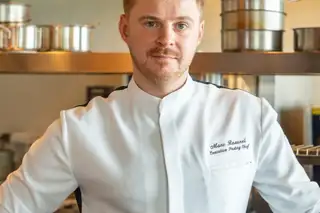
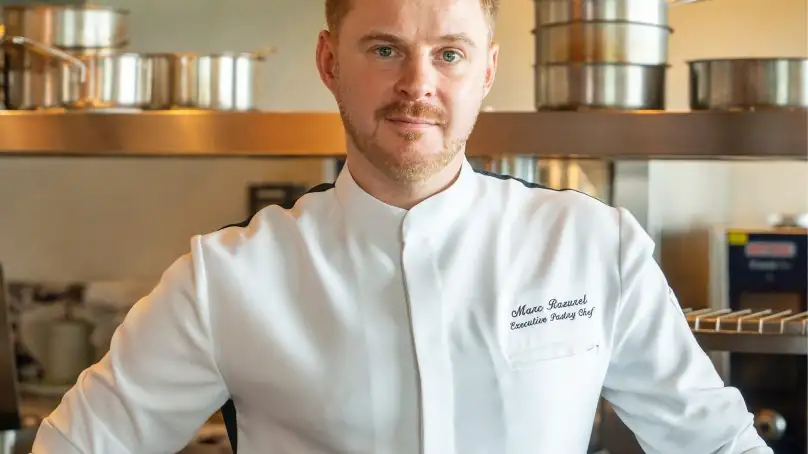
Marc Razurel, executive pastry chef at The Ned Doha, reflects on the evolution of pastry
The pastry chef at The Ned Doha explains how the French technique coexists with new hydrocolloids, silicone molds and chocolate molding with water.
According to Marc Razurel, innovation in modern pastry is incredibly precise. The Meilleur Ouvrier de France (MOF), the World Pastry Cup, and the World Chocolate Masters push pastry chefs to rethink everything, from the use of new hydrocolloids to technical advances that were difficult to imagine just two decades ago. But the fundamentals remain the same: perfect lamination, the right piping bag, and correct folding for mousse and sponge cake.
Now they use custom silicones and techniques like water-based chocolate molding, unthinkable twenty years ago. Razurel plays with shapes and architecture, but without the dessert losing its essential flavor or artisanal character.
In terms of flavor, modern gastronomy seeks purity. Razurel reduces sugar and, above all, lactose, allowing the main ingredients to shine, letting the natural acidity of the fruit or the intensity of the chocolate take center stage. Temperature control and aeration enable the creation of light and elegant desserts. Furthermore, each pastry is adapted to the culture of the country where Razurel operates, without compromising French technical excellence.
Regarding influences from around the world, Razurel sums it up as a French filter: you can use any local spice or exotic citrus fruit, but the technique must remain true to its fundamentals. Structure and execution remain the foundation, even as the flavors travel the world.
According to the chef, creativity relies on a complete reinvention of architecture and flavor profiles, which is why he prioritizes the "how." With new techniques and products like hydrocolloids, the dessert of the future becomes an emotional dialogue between the chef's vision and the diner's.