
Pre-extracted espresso is gaining ground in specialty coffee shops
The practice of preparing, storing, and serving pre-drawn doses is spreading in cities like London, Melbourne, and New York, and is dividing baristas.
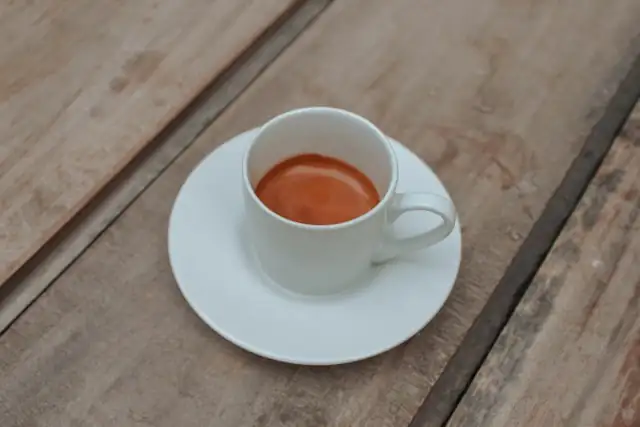
It's no longer necessary to extract the espresso right before ordering to ensure it reaches the cup with the expected quality. The technique involves preparing several doses, cooling them, and storing them in a single container, and it's gaining popularity in busy coffee shops in London, Melbourne, and New York. Some professionals defend it as a way to increase efficiency without compromising quality, and it has sparked debate among baristas and on social media.
According to American consultant Scott Rao, author of *The Coffee Roaster's Companion* and a leading authority on specialty roasting, the technique is gaining popularity due to its innovative nature and as a solution to the operational challenges faced by coffee shops. "Like batch brewing of filter coffee, this technique saves time and labor. Pre-extracted espresso is becoming increasingly popular in Australia, undoubtedly because the country has the highest number of specialty coffee shops per capita in the world, wages are high, and coffee shops are struggling to keep up with inflation and raise prices," says Rao.
Henrique Ortiz, co-founder of the coffee shop and roastery Catarina Café & Amor in Vila Mariana (São Paulo), believes the technique should be seen as an additional resource, not a substitute for a professional's work. "It's simply another tool available to baristas to improve the customer experience, whether by reducing wait times or increasing the consistency and quality of the drink," he says. But he cautions: "Like any other technique, if used incorrectly it can ruin the final product. It's not enough to simply mix several espressos in a pitcher."
In practice, the barista prepares several doses following the same recipe. These are quickly chilled and stored in a single container for short periods, generally two to six hours, before being used as the base for iced lattes, iced Americanos, or signature cocktails. At Casa 44 in Santos, São Paulo, the procedure is primarily used in preparations where espresso is combined with other ingredients. "Premixed espresso was implemented by the previous head barista, and the reason was its practicality in preparing drinks that include espresso," says Marcus Martins, a barista at the establishment, who cites the iced latte (espresso, milk, and ice) and the Brazilian cappuccino (espresso, milk, chocolate, and cinnamon) as examples.
The operational advantages can be even more significant for smaller businesses. Ortiz says that at his coffee shop, equipped with a single-group espresso machine, the technique yielded impressive results. “During the colder months, the demand for hot drinks increases, leading to a backlog of orders at the machine,” he explains. “We saw an improvement of up to 70% in brewing speed during peak hours,” he estimates. By working with a single batch, the technique also reduces variations between individual extractions, a common problem even for well-trained teams. Ortiz further notes that “with pre-brewing, I can even monitor the quality of batches using a total dissolved solids (TDS) meter.” Martins describes the time savings: “Imagine that before, I had to clean the portafilter, rinse the machine, pour the coffee into the grinder, level it, and tamp it down, just to then perform an extraction of approximately 30 seconds.” The predefined batch system allows me to skip all these steps and simply weigh the coffee I take from a bottle with a dispenser."
For Rao, efficiency explains the technique's popularization, but not its consolidation: this depends primarily on the result in the cup, and if the beverage compromised the consumer experience, it would hardly find a place in coffee shops. According to the expert, the sensory difference may be less than one might imagine, because many coffee shops filter the espresso before cooling it, and he believes the result often tastes better than freshly extracted espresso. "Filtering removes the crema and some suspended solids, making the coffee cleaner," he explains.
After extraction, espresso reacts with oxygen, altering volatile aromas, the perception of acidity, and sensory complexity. The carbon dioxide accumulated during roasting contributes to body and crema, but over time it dissipates, leaving the drink flatter. This is why the technique is best suited for drinks with milk, ice, or other ingredients where crema isn't crucial. To minimize these changes, airtight storage, consumption within two to six hours, and rapid cooling are key. Ortiz recalls that ten or fifteen years ago, some places kept leftover espresso for iced drinks, but it oxidized and tasted terrible, earning it the nickname "sludge."
Scott Rao believes the debate is part of the evolution of specialty coffee: “Pre-brewed espresso won’t eliminate fresh espresso or make it disappear. It will simply capture a portion of the market.” Martins sees potential in the practice but urges caution: “We should always strive to make a quality espresso, whether it’s served immediately or stored for later use.” Ortiz believes the potential extends beyond coffee shops: “Bakeries, hotels, restaurants, and other businesses where coffee isn’t the primary product can benefit enormously.”
Although there is still no consensus among purists, pre-extracted espresso has ceased to be a laboratory curiosity and is consolidating itself as one of the most recent attempts to balance quality and efficiency in coffee shops.