Gong Oriental Attitude in Milan, review: the prestigious and ambitious Chinese restaurant
Gong, in Milan's Risorgimento district, is one of the city's most prestigious Chinese restaurants, but its ambitious cuisine doesn't always live up to expectations.
The city's attention is now focused on more modern, pop-oriented fine-dining Asian restaurants, free from rigid territorial restrictions. However, Gong is the founder, and even a precursor, of this supposed movement.
Its reputation as the city's most authoritative Chinese restaurant remains undiminished. Three brothers of Italian-Chinese descent, descendants of the Liu dynasty, control, along with two other establishments, BA and Iyo (the latter boasting a Michelin star), a significant part of Milan's fine Asian gastronomy. Here, the influence of other cultures, including Italian, sets the standard: Asia is an attitude, not a dogma.
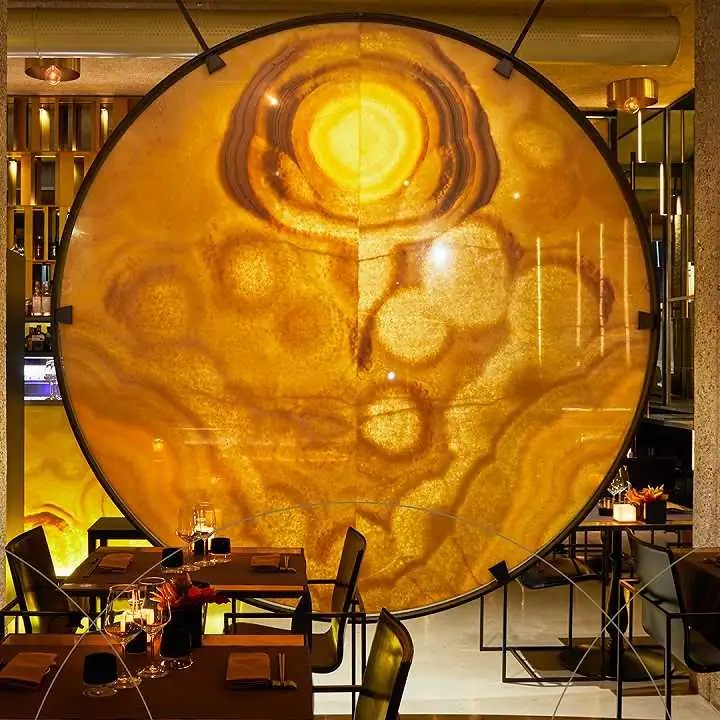
The space is cold and monumental, austere with few, refined touches, evoking the office of a high-ranking official in a totalitarian regime. It is refined and sophisticated, yet intimidating. The dense atmosphere, a uniform yellow-ochre, permeates the air, and the large golden gongs on the walls do little to alleviate the feeling of disconnection from the surroundings. The welcome is impeccable, though rigid and cautious.
The service is friendly and impeccable, though somewhat robotic. The waiter's fixed position between two tables at the back of the room feels awkward and oppressive. The sommelier's intervention, with his exuberant Venetian accent, briefly interrupts the formality, and the more he recounts the story of the suggested wine, an "Andata e ritorno" from the artisanal winemaker Ancarani in Romagna, the more details he seems to reveal.
The beauty of Japanese soba noodles lies in their buckwheat construction, which gives them an earthy, toasted hazelnut flavor. Mixing them with squid ink is a poor choice, as the result tastes neither of ink nor buckwheat. The accompanying shrimp soup only adds a salty, bland flavor, instead of the delicate, natural taste of the sea.
In the dim sum with black cod on a bed of bottarga cream, the herb-infused panko is barely noticeable. In the wagyu beef dim sum with foie gras and truffle sauce, the filling is exquisite, but the pasta is mediocre, as with the other dim sum. The spicy meat dumplings, with their thin, crystalline pastry, fall apart and open at the first touch of chopsticks.
The glazed eel with kabayaki sauce, foie gras, and Fuji apple on a beetroot osmosis, despite its composition, boils down to a nori sandwich with a creamy mix of indistinguishable, rather cloying textures and flavors. The crispy pork belly is perfectly cooked and has a perfect texture, but the chestnut cream with miso and the marinated cabbage are overpowered by a blend of aromatic herbs that overwhelms everything. The herbs are reminiscent of porchetta.
Prices are those of fine dining: tasting menus range from €85 to €130, à la carte dishes from €20 to €30, and there's a €5 service charge. On the plus side, the menu features creative dishes and refined, high-quality ingredients. On the downside, the cuisine appears sophisticated but is disorganized and clumsy, served in an austere and unwelcoming atmosphere, despite its elegance. This is a prime example of the gap between reputation and direct experience: an ambition that remains just words on paper.