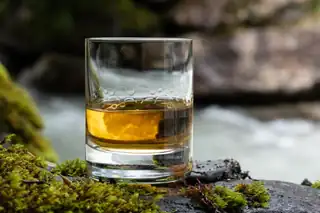
Peat defines the flavor of smoky whiskey, according to a master distiller from Oregon.
Smoky whisky owes its character to peat, whose smoke permeates the grain during drying, explains Caitlin Bartlemay of Hood River Distillers.
“Over the drying process the flavors and aroma from the peat and peat smoke are imparted in the grain, and follow the product through until it ends up in your glass,”
There are many ways to order whisky, and apparently even more ways to make it. The difference between whisky and bourbon lies primarily in their place of origin, although bourbon meets additional requirements, and most of the world's whisky comes from Scotland. Among the styles, peated whisky stands out for its particularly intense flavor and is made with peat, a spongy organic substance formed from decomposed plant matter, while whisky is made from grains.
Caitlin Bartlemay, master distiller at Hood River Distillers in Oregon, describes the nuances of these whiskies this way: “Peat is a fundamental part of whisky tradition. It’s the flavor and aroma that defines many whisky lovers around the world. Including peated malt, even as a small part of the blend, can add great depth and character to the final aged spirit. Its contribution ranges from a salty, iodine-like touch, through robust earthy notes, to all the nuances of smoke.” It’s a key characteristic of many Scotch whiskies.
Although peat blocks are essentially lumps of earth, it's the smoke from the burning peat that interacts with the whisky. Early distillers began making smoky whiskies because peat was a practical fuel. Traditional malting involves briefly moistening the grains to encourage germination and then drying them to retain their sugars and enzymes, and burning peat was the simplest way to do this. "During the drying process, the flavors and aromas of the peat and its smoke permeate the grain and accompany the product all the way to your glass," says Bartlemay.
Pebbled whiskies differ because the peats used in them also differ. According to Bartlemay, “Peat is an incredible way to discover the origin of a region. Depending on where the peat comes from and how the final malt is used, it will change the way those flavors and aromas are expressed in the final product.” That's why an experienced drinker with a discerning palate can distinguish the origin of a pebbled whisky simply by tasting it.