Unwritten rules for a wine tasting at the winery
Visiting a winery requires respect for the time of the staff and the winemaker, and it is advisable to avoid euphoria among the barrels and disinterest in the tasting room.
Wine tastings and winery tours have unwritten rules, although they are generally recreational activities that shouldn't be governed by strict regulations. If an employee or the winemaker themselves dedicates their time and knowledge to a visitor, the least they can do is reciprocate with respect.
Visiting a winery is an experience that allows you to discover the creative process. No one showcases the authenticity of a region's grape varieties and the wines found in specialty shops better than the producers themselves.
Spitting isn't mandatory at every tasting. In a tasting of different vintages of a winery's main and secondary wines, like those at Opus One in Oakville, California, wasting a drop would be a mistake, except perhaps for the person driving. When the tour includes barrel samples and cuvée experiments, and the focus shifts towards the flagship wine, it's best to approach that wine with a clear mind. Spitting isn't impolite and is a common gesture; a discreet spit is less embarrassing than confusing the grape varieties at the end of the tour.
Perfume is perhaps the biggest mistake in a wine tasting. The aromas of a good wine contain a wealth of information, and an intense fragrance masks them: if all the wines seem to smell of mint, basil, cinnamon, and cloves, what you're actually perceiving is the perfume of the wine next door.
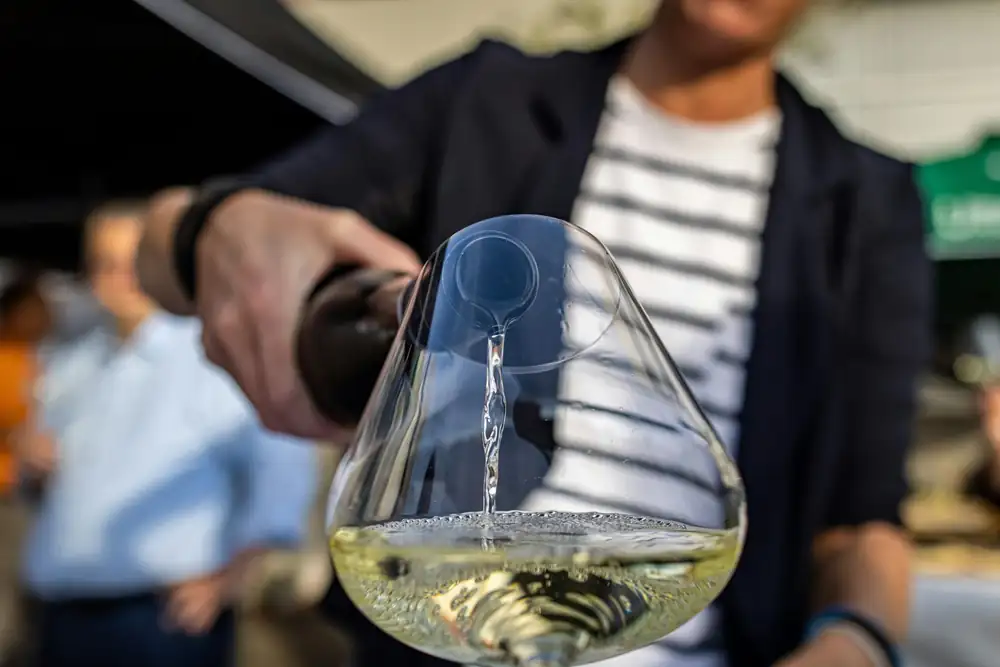
The glass is held by the stem or, less frequently, by the base. This way, your fingers don't obscure the color, it's easier to swirl the wine, and its temperature isn't affected by the heat of your hand. Holding the glass with your palm leaves fingerprints and warms the wine. If the wine arrives chilled from the winery, it's best to wait a few minutes and swirl it in the glass, as this releases its flavors and aromas.
Asking questions is the best way to learn about the production methods, the secrets, and the people behind each wine. Winemakers usually appreciate the interest, and there are no silly questions, although it's important not to confuse Cabernet Sauvignon with Sauvignon Blanc. A single answer from a winemaker can be more revealing than dozens of wines tasted in silence.