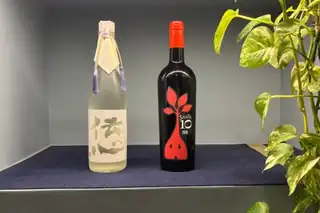
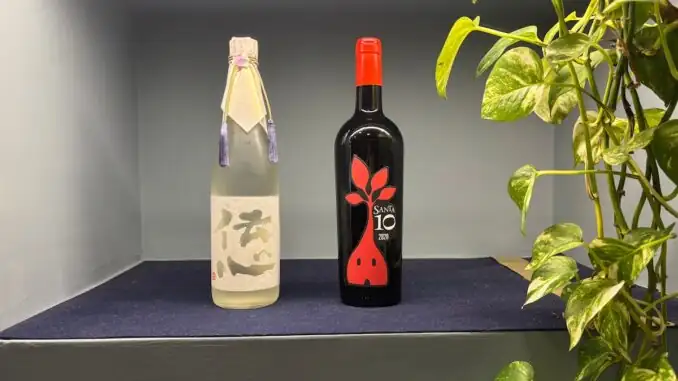
Wine and sake are more alike than you might think.
Although they are made in very different ways, wine and sake share tradition, territory and a place at the table.
Despite their apparent differences, wine and sake have more in common than you might think. Gianluca Di Giulio of Kodama Enoteca explains this in the third installment of this practical guide.
Both beverages are the result of fermentation, but their journey to the glass is very different. Wine is made from fruit, which already contains sugars, water, and the elements necessary for fermentation, so nature does most of the work. Sake, on the other hand, comes from rice, a grain that doesn't ferment easily on its own, and here human intervention is essential, even in the purest and most delicate techniques.
Di Giulio describes sake as an ethereal beverage, less material and earthy than wine, and therefore open to a wide range of interpretations. It can be described with few words and aromas, but it conceals deeper nuances than it reveals. In Japan, its consumption can be compared to that of wine in Italy, although sake does not have such a well-established communication channel.
Regarding tradition and territory, the concept of terroir might seem strange when applied to sake, but over 80% of this beverage is water. This water conveys the origin, minerals, and climate of each place, and this is clearly perceived in the final flavor.
In many Japanese prefectures, sake is intrinsically linked to the local cuisine. From soups to fish and meat dishes, each sip can tell a story about the region. In this sense, wine and sake share a similar role: they are tools for understanding stories, cultures, and people, rather than simply beverages to consume.