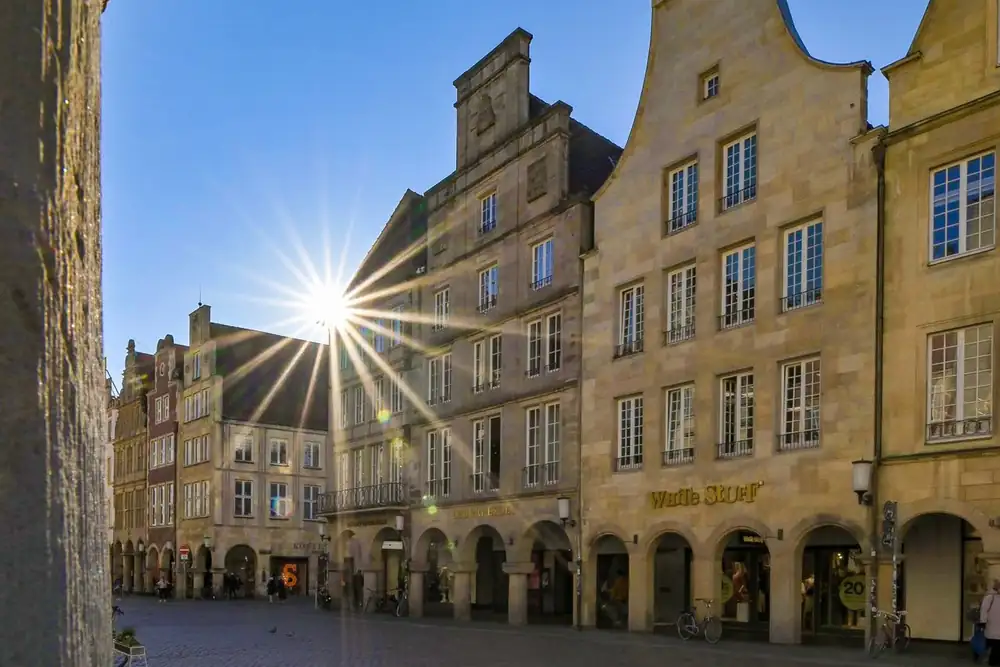
The best restaurants in Münster
35 percent of all everyday journeys in Münster are made by bicycle – this slows down the pace of life and creates a very special atmosphere in Germany's cycling capital. Münster's culinary scene is also constantly evolving, presenting itself as diverse and innovative.
1. Artichoke Heart
Breton chef Frédéric Morel cooks in his open kitchen, drawing inspiration from modern French cuisine which he combines with Creole and Westphalian influences. The menu consists of six to eight courses. Next door at "Maison Morel," Breton buckwheat crêpes and chilled cider are served.
Concept: A casual fine dining restaurant with an open kitchen and a truly unique character. A monthly changing menu offers four (Wednesdays, Thursdays, and Sundays only, excluding holidays), six, and eight courses. Cuisine: Breton roots, Westphalian produce, Creole spices, and a high degree of creativity: Frédéric Morel's highly personal style defies categorization. An elegant fish course features cold-smoked sturgeon with Ossetra caviar, a triple variation of cauliflower, and samphire. A tribute to his adopted home is the Münsterland venison, served with sautéed porcini mushrooms and cranberries. This is accompanied by a delightful pumpernickel purée and, on the side, a praline made from braised venison shoulder. Wine: The wine pairings—including a prestige version—and their superb non-alcoholic counterparts are curated with the utmost care. Atmosphere: The exceptionally friendly service—even the chefs come to the table—contributes significantly to the relaxed atmosphere. Conclusion: Great taste experiences, both on the plate and in the glass.
2. BOOK
The basement restaurant in the centrally located residential area offers menus such as "Fauna" or the vegetarian "Flora" in three to seven courses. Laurin Kux surprises with creative cuisine and select ingredients. For example, in the amuse-bouche, he hides swedes in dark chocolate; the scallop from Norway is also excellently prepared.
Concept: Casual fine dining in the trendy Kreuzviertel district. Three- to six-course menu. Individual dishes can also be ordered in vegetarian versions and à la carte. Cuisine: Since July 1, 2026, the successor to head chef Laurin Kux has been the former sous-chef Johannes Kemper, who also became a co-owner of the restaurant. The Wagyu carpaccio, presented in a wreath with chanterelles and torched cherries, whetted our appetites both visually and in terms of taste. The gently cooked Arctic char, accompanied by an airy yeast hollandaise, was superb, as was the chicken duo: roasted breast with fermented salad cream and Parmesan foam, and, as an intense counterpoint, a leg ragout. Wine: Maître sommelier Celia Brietzke will further expand the exclusively European wine list – 190 selections, 90 percent of which are from biodynamic vineyards – with a focus on Germany, Austria, and France. Atmosphere: A subtly elegant basement restaurant; A small, very nice terrace. In conclusion: A thoroughly enjoyable experience with plenty of charm. The trend is definitely upward.
3. Restaurant Spitzner
In the stylish restaurant in the historic Oerschen Hof in Münster's city center, chef Karl-Nikolas Spitzner offers a selection of set menus and à la carte dishes, including impressive creations such as gratinated dumplings of Ijsselmeer pike and crayfish tails or North Sea turbot en sarcophage with champagne beurre and pieces of lobster.
Concept: A stylish fine-dining restaurant. Located in the heart of the city, yet far removed from the everyday hustle and bustle. Four- to seven-course menu featuring seasonal and market-fresh ingredients. Smaller lunch menu on Saturdays. À la carte options available. Cuisine: Karl Nikolas Spitzner loves French classics, precise craftsmanship, and first-class products. While these are preferably, but not dogmatically, sourced from the region, the foie gras is always a delight, served as a terrine and ice cream, with finely balanced flavor contrasts of poached mandarins and celery. Equally superb is the slice of sea bass accompanied by a calf's head and nut butter purée. Wine: Maître sommelier Patrick Stewart, who returned to his native Münsterland after stints in top restaurants and the wine trade, provides the high-quality wine pairings. Atmosphere: Modern elegance in the Oerschen Hof, a baroque aristocratic palace dating back to 1749. Conclusion: A culinary experience in a historical setting.