Franciaorta
Franciacorta - Fine sparkling wine from Italy
Franciacorta - Fine sparkling wine from Italy
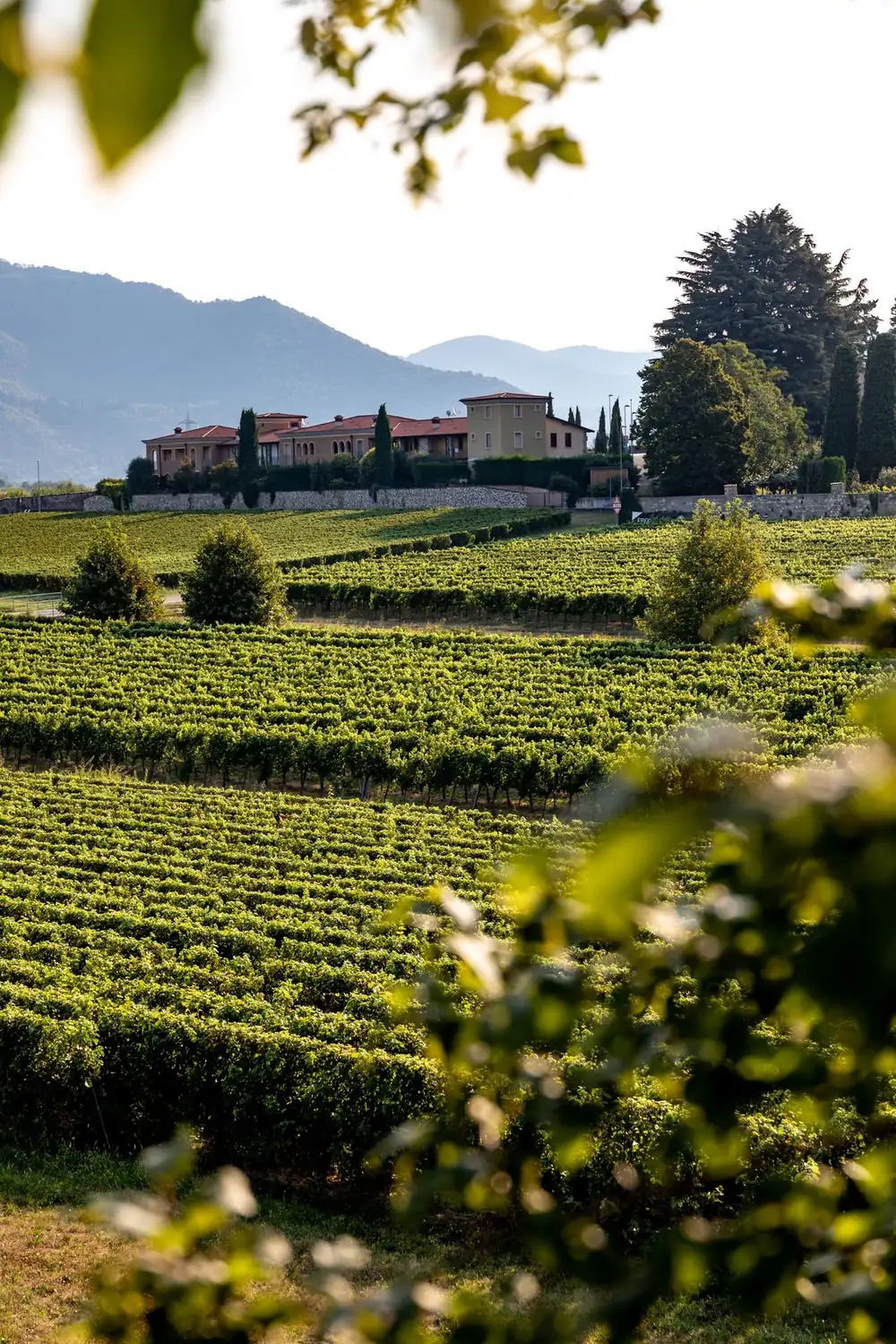
Most German license plates leave the motorway near Mori, heading towards Lake Garda. Only a few continue further, turning west at Verona and reaching one of the most beautiful landscapes in Northern Italy after another 45 minutes: Franciacorta. Like a green carpet of hills, it lies against the backdrop of the snow-capped peaks of the Bergamasque Alps. Wooded ridges dotted with meadows, vineyards, and hedgerows, interspersed with small villages boasting old palazzi, stone houses, monasteries, and abbeys. In the background, Lake Iseo reflects the blue sky and white clouds, an "oasis of beauty," according to Lara Imbrani. But it's not just the beauty that the brunette woman raves about. It's also the wine that grows there. It's called, like the landscape, Franciacorta, and what makes it special is: it's sparkling. Franciacorta are the finest sparkling wines in Italy, grown on the glacial moraine soils of the Alpine foothills, bottle-fermented, and not significantly cheaper than Champagne.
Franciacorta, these are the finest bubbles in Italy.
Over 17 million bottles are produced, most of which are consumed by Italians themselves. Only eleven percent are exported, a small portion of which goes to Germany. This explains why Italian Champagne, particularly Franciacorta, is relatively unknown in Germany, and why people prefer to travel to Lake Garda, where Bardolino and Lugana are produced, and where, if sparkling wine is desired, every supermarket stocks Prosecco. Lara Imbrani is a businesswoman. Her husband Paolo Radici's family owns a global conglomerate that produces synthetic fibers and films for fashion, furniture, and cars. Twenty-three years ago, Lara Imbrani and Paolo Radici founded a winery out of pure desire and passion. They wanted to offer an alternative to the industrial product, one that originates in nature, not in a machine. One that matures slowly, not that is manufactured quickly. One that requires skill, but in the sense of passion and intuition, not engineering knowledge. The estate is called Ronco Calino. From his cellar come some of the best Franciacorta wines: Even the simple Brut is sophisticated, the Extra Brut Riserva “Centoventi” is both refined and sophisticated, and the Rosé “Radijan” is spirited and made from 100 percent Pinot Noir. “When a wine has to spend five years on the lees to reach its optimum” explains Lara Imbrani, “you develop a different sense of time than with a fashionable garment. You need patience. Your clocks suddenly move very slowly.”
Ronco Calino is one of 116 estates in Franciacorta that produce bollicine, in Italy, all sparkling wines are called "bubbles." The base wine consists primarily of Chardonnay, the region's main grape variety; it is complemented by the red Pinot Noir, which is vinified as a white wine, similar to Champagne. What all these estates have in common is their relatively young age. In 1961, the Guido Berlucchi winery achieved the first successful bottle fermentation. Did any imitators follow suit? Initially, no. The sparkling wine boom didn't begin until the late 1970s. Before that, wine was produced here, but it wasn't sparkling, was mostly red, and not particularly exciting, despite renowned grape varieties such as Merlot, Barbera, Cabernet Franc, and Nebbiolo. In 1978, the newly founded wineries Ca' del Bosco and Bellavista launched their first bollicine. The success was overwhelming. From then on, Franciacorta began to bubble. Wealthy city dwellers converted their summer residences into sparkling wine estates and drove long tunnels into the hills to store the bottles. Nameless small-scale winemakers mustered the courage to make large investments. Passionate managers, driven by their longing for rural life, embarked on this effervescent adventure. Clever farmers' sons, shrewd bankers, and young oenology students without money but with visions donned rubber boots and made the vineyard their workplace. The remarkable thing was that most of the products were successful. The mineral-rich soils were ideal for a fine Italian sparkling wine, and the grape varieties were a perfect match. In any case, demand increased year after year.
"If we are good, we must not be cheaper than champagne."
“In the beginning, you can dream” says Maurizio Zanella, the founder of Ca' del Bosco, “but then you have to work precisely and not improvise.” Zanella's dream began at 15, when he returned from a school trip to Champagne convinced that something like Italian Champagne could also be produced in Franciacorta. With the help of his family, the dream became a reality. Ca' del Bosco became a guiding star. Zanella's audacious “Dosage Zero” delighted an entire generation of wine critics at the time: audacious because it managed completely without dosage and still tasted delicious. When Zanella also managed to poach the long-serving cellar master of the Krug Champagne house, he was hailed as a wunderkind, which he enjoyed but also ridiculed: "Anyone who practices bottle fermentation mustn't believe in miracles." Another of Zanella's convictions was: "If we're good, we mustn't be cheaper than Champagne." This statement still holds true for Ca' del Bosco today. He encouraged others to make their own investments. Ferghettina, for example, an estate that started with three hectares of vines in 1991, now cultivates 200 hectares and has everything from a cold storage facility for the grapes to a hydraulic basket press, all of which is expensive but also necessary to operate at the highest level. Brut, Extra Brut, and Pas Dosé are excellent, and the prestige cuvée "Milledì" is extraordinary. The latter is bottled in a striking square-shaped bottle, designed by Matteo Gatti, the founder's son. “This allows the wine to have more contact with the yeast during the aging process” explains his sister Laura, who manages the estate with him, “the wine stays fresher for longer and needs less sulfites.”
Contadi Castaldi's cellars also produce refined sparkling wines from Italy, including the cashmere-smooth Satèn "Soul," aged on the lees for 60 months. Top chefs like Stefano Cerveni of "Ristorante Due Colombe" in Borgonato sometimes create special dishes to complement it, such as blue lobster with samphire and vanilla. Satèn is, incidentally, the most successful Franciacorta specialty: a fine Italian sparkling wine bottled at a lower pressure (four instead of six atmospheres), which, similar to French Crémants, runs particularly silky across the palate. According to regulations, it must be made exclusively from white grapes. "Satèn has become a Franciacorta icon," reports construction entrepreneur and Bellavista founder Vittorio Moretti, who also owns Contadi Castaldi. He himself had the idea for Satèn, invented the name, initially reserved it for himself, but later transferred it to the protection consortium so that all Franciacorta producers could use it. A clever move; Satèn thus became a brand. Meanwhile, the number of Franciacorta wineries that have achieved renown has increased enormously. Estates such as Il Mosnel (situated in the middle of a beautiful park with mature trees), Antica Fratta and Lo Sparviere (both with magnificently renovated villas), Barone Pizzini (the first organic winery in the region), Villa (which includes an entire medieval village), Castello Bonomi, La Montina, Fratelli Berlucchi, Monte Rossa, Majolini, Quadra, La Fiorita, Lantieri de Paratico, and Biondelli, they all produce bollicine of a high or very high standard. Ricci Curbastro, of the eponymous winery, even sets aside bottles of this Italian champagne that are only disgorged after seven or eight years. The winemaker calls it a "Museum Release": "I want to show that a Franciacorta can mature for a long time without losing its freshness."
Stressed Milanese flock here in droves on weekends.
Franciacorta is a small growing region for Italian Champagne; there are no large, contiguous vineyards. In a competition for grace and charm, Franciacorta would easily surpass Champagne. This charm and the radiance of the wine have their effect. Stressed Milanese flock here in droves on weekends to swim in the lake, play golf, attend classic car rallies, go birdwatching, or trek on foot or by mountain bike. And since the installation artist Christo made Lake Iseo accessible for three weeks two years ago with his "Floating Piers," the lake has become world-famous. Japanese, Americans, Russians, Germans, Swiss, they all want to see the beautiful body of water. The gastronomy sector has already responded to this new elite tourism. Osterias have become trattorias, trattorias have become ristorantes. Not everything served there does Franciacorta proud. Those who want to eat well must choose carefully, ideally restaurants dedicated to cucina del territorio (regional cuisine). The "Due Colombe" offers the high-class version of this cuisine: a conscious avoidance of international ingredients and trends, in favor of elaborately refined grandmother's recipes. The wild pigeon with gravy reduction and honey vinegar isn't even better than "Pinchiorri" in Florence. Paired with the 2011 Franciacorta "Demetra" from Mirabella, magnificent. Marco Acquaroli at "Ristorante Natura" is similarly ambitious. Vineyard snails, sturgeon, veal, air-dried sardines from the lake, everything comes from local farms or production. His eel fillet with caramelized onions and wild garlic is both local and ingenious.
Snails, sturgeon, veal, air-dried sardines from the lake, all come from local farms.
Less pretentious, but technically perfect, is the cooking of Lorenzo Tagliabue at "Barboglio de Gaioncelli." Even German pasta lovers gladly forgo their beloved spaghetti for his Risotto Franciacorta. A relic from a bygone era is the "Osteria della Villetta." Tripe, bollito misto (mixed meat stew), and veal tongue are staples on the menu, along with a fantastic lasagna made with minced veal and Grana Padano. Guests dine at gleaming, scrubbed tables, drink the restaurant's own sparkling Italian wine, Franciacorta, and chat with other diners across the dining room. "We always wanted to remain a simple osteria," explains Maurizio Rossi, the owner. The most authentic cucina del territorio can be found at Michele Valotti's "Trattoria La Madia." A rural trattoria in a remote mountain village near Brescia, packed every evening with people yearning for the sapori antichi: the taste of fermented vegetables, the scent of wild herbs and mushrooms, pasta made from ancient grains, beef from alpine cattle, veal heart tartare, and cheese made from the milk of the rare Adamello mountain goat. "An imperfect but authentic cuisine," says Valotti, meals with a sense of terroir. Those seeking rest after the meal and all the bubbly need a bed. They can find it not only in luxury hotels but also on some wine estates, usually a bit cheaper, but surrounded by greenery and, in some cases, just as good (see the information guide). The most stylish agro-relais is the "Villa Biondelli": meticulously restored rooms in an old palazzo nestled among the vines. The next day, lunch can continue with Italian champagne; Josko Biondelli is happy to open a rosé to accompany it. He had worked as a headhunter in England for many years before deciding to return to Italy.