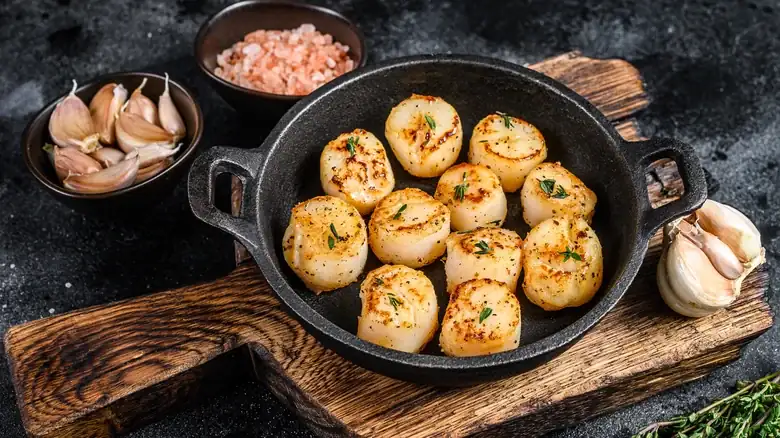
13 Ways To Make Your Scallops Taste Way Better
A cream sauce can also take the taste of your scallops to the next level. There are many different cream sauce variations, but choosing one with hints of garlic or rosemary will pair nicely with the buttery, seared scallops.
Some heartier sides that will help make the meal more filling and satisfying include rice pilaf, risotto, angel hair pasta tossed with a little butter, scalloped potatoes, and mashed potatoes. Don't forget about dessert, too! A few of the options that you might want to consider include strawberry shortcake, cheesecake, grilled fruit, and lemon meringue pie.
Changing up the sides you serve with your scallops — like basil risotto or spinach couscous — is one way to experience new flavors. However, you'll also want to find new ways to cook the scallops themselves or ways to integrate new flavors. Consider dishes such as scallop stir-fry , coquille St. Jacques , scallop alfredo , cioppino , or sweet and sour scallops.
Decide between wild-caught and farm-raised scallops
The first step to cooking delicious-tasting scallops starts well before you're even in the kitchen and ready to start preparing your meal. Rather, it starts at the grocery store, seafood market, or wherever else you purchase your scallops. When shopping for this shellfish, you'll typically have the option to choose between wild-caught and farm-raised scallops. There are pros and cons to each type of scallop that you'll need to weigh before deciding which one you would like to purchase. First, when it comes to taste, both varieties have the potential to help you craft scrumptious meals if they're cooked properly. However, the taste of a wild-caught scallop will be a little better than that of a farm-raised one. When you can find wild-caught scallops, it's also more likely that the market you're purchasing them from will have a few different types of scallops to
Determine whether you want to use sea scallops or bay scallops
Despite the similarity in their names, there are some serious differences between sea scallops and bay scallops, and that can impact which variety is best for your recipes. The most noticeable difference between the two is size. Sea scallops are about three times as large as bay scallops. Beyond these major size differences, bay scallops and sea scallops also have different tastes and textures. Sea scallops are a bit thicker and chewier than the more tender bay scallops. They are also a bit saltier, compared to the slightly sweeter flavor of a bay scallop. With their larger size and more elegant presentation (and higher price), sea scallops are often the first choice for a special occasion or fancier meal. Bay scallops cost less, making them more popular for daily cooking tasks. Understanding these key differences between sea scallops and bay scallops, and c
Look for dry scallops instead of wet scallops
If you haven't purchased scallops too many times before, you may not even realize that there are both dry scallops and wet scallops. Or, even if you've seen both of these labels before, you might not have any idea what they mean or if it matters which type you choose. Scallops labeled as dry are packed precisely as they are when removed from the ocean or bay. Nothing is added to them to increase their weight or their shelf life. Wet scallops, on the other hand, are soaked before being packaged. The solution they are soaked in is a phosphate solution that works to make them a brighter white color. As they soak, they absorb much of the liquid, which significantly increases their weight — up to 30%. This means that wet scallops can cost about 30% more than dry scallops, but you're getting fewer actual scallops with the wet option. The phosphate solution that
Thaw frozen scallops properly
Finding fresh scallops can be a challenge, unless you live very close to the water. For this reason, you'll likely need to defrost frozen scallops before you'll be ready to cook them. Proper thawing is essential, not just to ensure the best taste for your dishes, but also to keep yourselves and others safe from foodborne illness. Never leave frozen scallops (or any other frozen meat or seafood) out on the counter to thaw. When you thaw meat or seafood at room temperature, it will not thaw evenly. The outside of the package will warm up and thaw much more quickly than the center. According to the United States Department of Agriculture, the temperature of the outer, warmer layers may reach the danger zone. If the temperature of the food gets between 40 and 140 degrees Fahrenheit, it creates a welcoming environment for bacteria to grow. Instead of leaving your scallo
Brine the scallops before cooking
Brining scallops before cooking them is a step that many people often skip. If you haven't been brining your scallops, now is the time to start. You'll be impressed with how much better they'll taste after completing this one simple step. If you haven't heard of brining, it refers to a cooking process where salt (and sometimes other flavorings) are added to meat or seafood before it is cooked. To brine scallops, prepare a solution of water and salt. Let the scallops soak in the salt water for about 10 minutes. Doing so will help improve their taste and texture. The salt will become infused throughout the scallop, adding some seasoning to the inside. Moreover, earlier we discussed how the chemicals used to make wet scallops can have a negative impact on their flavor. When you brine wet scallops, it can help adjust their flavor and balance out more of the chemical-soapy
Dry the scallops before cooking them
Moisture is the enemy when it comes to cooking scallops. If they are holding onto too much water before you put them in the pan, the water will prevent them from getting nicely seared, and they'll end up soggy. For this reason, it is essential to dry scallops before cooking them. If you purchased dry scallops, it shouldn't take too long to remove any excess moisture. However, for wet scallops, you'll need to spend a little extra time soaking up the moisture. Lay the scallops out on a plate in a single layer. Pat them dry using paper towels, pressing gently into each scallop to pull out as much water as possible. Take your time with this step; it can easily take at least 10 minutes to remove all the excess water that the scallops are holding. This is time well-spent; if you skip it, all that excess moisture will release into the pan as you start cooking the scall
Get a stainless steel or cast iron pan really hot before putting in the scallops
While moisture may not be your friend when cooking scallops, heat is going to be. When you're cooking scallops on the stove, you want the pan to be nice and hot before adding them in. If the pan isn't hot enough, the scallops won't get a good sear. Ideally, the pan should be heated to about 450 degrees Fahrenheit. Always preheat the pan before you put in the scallops. An infrared thermometer can help verify that the pan is hot enough to add the scallops. Not only is it important to make sure that the pan is hot enough before adding the scallops, but it is also important to choose the best pan type to cook them in. Because you'll be cooking at such a high temperature, you'll want to avoid nonstick pans. Stainless steel or cast iron are both excellent options when cooking at higher temperatures. They will help ensure a more even distribution of heat, resulting
Cook the scallops in an oil with a high smoke point
Choosing the right pan and heating it before adding the scallops is important. However, choosing the right oil to cook the scallops in is equally important. As shared earlier, you want to heat the pan to 450 degrees. This is very hot — so hot that some types of oil may burn and begin smoking, rather than staying at the right consistency to cook the scallops properly. Obviously, cooking your scallops in smoking and burning oil isn't going to result in the delicious flavor you're aiming for. For this reason, you must be selective when deciding which type of oil to use, and only use varieties with a high smoke point. Extra virgin olive oil may be your go-to for many other recipes, but you'll want to leave it to the side when searing scallops. Olive oil's smoke point is between 325 and 375 degrees, and you'll be cooking at much higher temperatures. Instead, opt for
Consider alternative cooking methods
Searing scallops is one of the best ways to cook them as long as it is done correctly. The scallops turn out tender on the inside, a tad crispy on the outside, and scrumptious through and through. However, there are other ways to cook scallops that will also produce incredible results. One cooking method you might also want to try is grilling them. This will work best with sea scallops, as they are larger than bay scallops. After removing the excess moisture and tossing the scallops with a little bit of olive oil, salt, pepper, and any other desired seasoning, skewer them, leaving a little space between them. It often works better to use two skewers, instead of just one, to keep the scallops from sliding and twisting around. Once placed on the grill, the scallops will only need to cook for about two to three minutes on each side, then they'll be ready to enjoy. Anot
Do not overcook them
Regardless of whether you choose to sear, grill, or broil your scallops, one of the worst things you can do is to overcook them. Scallops do not take long to cook, typically only a few minutes. Many people are so used to cooking thicker cuts of meat or fish, that they assume scallops will require a similar cooking time, so they keep them over the heat of the pan or grill or in the oven for much longer than is necessary. If scallops are cooked too long, they will be much less enjoyable to eat. Overcooked scallops are tough. When you try to eat them, they'll be rubbery and chewy. It's certainly quite the opposite of how tender they are when cooked properly. In most cases, your scallops will not need more than about two minutes on each side, and sometimes even less on the second side. You'll know they're done when their outside is caramel-colored and the inside
Make a sauce to top the scallops
Scallops can taste delicious right out of the pan or off the grill. However, if you're looking to craft a more upscale meal for a special occasion, one of the best ways to dress up your scallops is to add a sauce to top them. The only problem you'll face is deciding on which recipe to try because there are so many fantastic options to consider. One type of sauce that you might want to try is a lemon herb sauce. Lemon pairs nicely with scallops and other seafood, so combining some lemon juice with butter, garlic, and fresh herbs is certain to deliver a delightful meal. A cream sauce can also take the taste of your scallops to the next level. There are many different cream sauce variations, but choosing one with hints of garlic or rosemary will pair nicely with the buttery, seared scallops. Some other sauces you could consider making to go with your scallop
Choose the best side dishes to accompany the meal
While scallops are tasty, they are not enough to make a full meal. To make sure you and others thoroughly enjoy the scallops you prepare, you'll also need to put some thought into what side dishes you'll serve with the meal. The cooking method you pick for the scallops will help point you in the right direction for choosing the best side dishes. However, generally speaking, scallops are considered a lighter and healthier meal. You can keep the meal healthier by serving them with a nice salad or some asparagus, green beans, or another vegetable. Some heartier sides that will help make the meal more filling and satisfying include rice pilaf, risotto, angel hair pasta tossed with a little butter, scalloped potatoes, and mashed potatoes. Don't forget about dessert, too! A few of the options that you might want to consider include strawberry shortcake, cheesecake, grill
Experiment with different recipes featuring scallops
We're all guilty of finding one recipe or method of cooking we like and sticking to it. While it is good to have a tried-and-true recipe to fall back on when entertaining or for busy nights when you don't want to think about what you're doing, always cooking scallops the same way is doing yourself — and your palate — a disservice. There are so many different scallop recipes out there. If you never try anything new, you may be missing out on finding a new favorite way to prepare and serve your scallops. Changing up the sides you serve with your scallops — like basil risotto or spinach couscous — is one way to experience new flavors. However, you'll also want to find new ways to cook the scallops themselves or ways to integrate new flavors. Consider dishes such as scallop stir-fry, coquille St. Jacques, scallop alfredo, cioppino, or sweet and sour scallops.