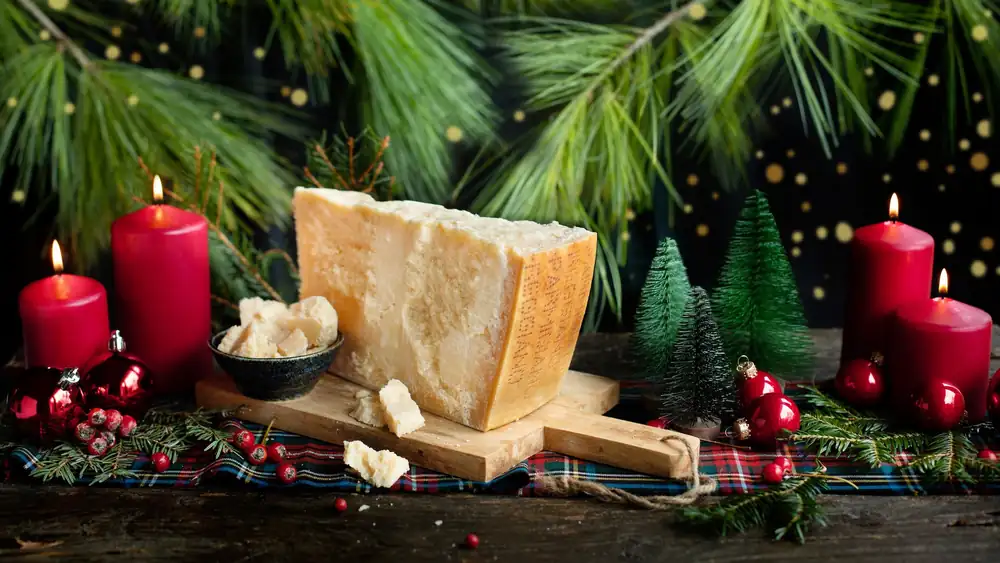
A biodiversity that makes it unique
Among the oldest and most famous cheeses in the world, Parmigiano Reggiano DOP is produced today as it was a thousand years ago, with just three ingredients: milk, salt, and rennet, using a completely natural process and without the use of any additives.
Many pieces for a mosaic full of taste
But if Parmigiano Reggiano DOP has only three ingredients and a natural process, what factors contribute to its extraordinary biodiversity? First, the varieties of cattle from which the milk is obtained and the production area, then the different aging processes and the special certifications it can carry, all elements that offer truly varied tastes, flavors, and nuances.
The cattle breeds used to produce Parmigiano Reggiano PDO are the Italian Friesian, the Bianca Modenese, the Bruna, and the Rossa Reggiana. The Italian Friesian is the most common among Parmigiano Reggiano PDO breeders and is distinguished by its high productivity; the Bianca Modenese, a Slow Food Presidium, produces milk with an optimal fat-to-protein ratio, ideal for cheesemaking; the Bruna has also established itself for its milk, with a high casein profile and high fat content, while the Vacche Rosse (Red Cows) produce milk rich in protein, calcium, and phosphorus, with excellent cheesemaking properties: the cream rises to the surface properly, the milk curdles quickly, the curd is firm and elastic, and the yield is high.
The production area includes the provinces of Parma, Reggio Emilia, Modena, Mantua to the right of the Po River and Bologna to the left of the Reno River, for a total surface area of approximately 10,000 km2.
Parmigiano Reggiano PDO is aged for a minimum of 12 months (the longest minimum maturation period of all PDO cheeses), but it takes around 24 months for it to reach the ideal maturity to express its full characteristics. Parmigiano Reggiano PDO aged 12-19 months has delicate aromas of fresh milk, yogurt, and butter, with vegetal notes of herbs and boiled vegetables, and a sweet and tart flavor. Parmigiano Reggiano PDO aged between 20 and 26 months has a crumbly, grainy texture, expressing a good balance between sweet and salty flavors, and the milky and yogurt aromas are accompanied by notes of melted butter and fresh fruit such as banana and pineapple. Parmigiano Reggiano PDO aged between 27 and 34 months has aromas of dried fruit, the aroma of meat broth, and spices such as nutmeg, and a soluble, very crumbly, and dry flake. Parmigiano Reggiano aged between 35 and 45 months is intense with notes of spice and smoke, a deep yellow color tending towards amber and very visible tyrosine crystals.
Certified products include Parmigiano Reggiano DOP (Mountain Product), which must be made from 100% mountain milk, over 60% of the cows' feed must be grown in mountain areas, and the production and minimum aging period of 12 months must take place in the mountains. Parmigiano Reggiano is the most important mountain DOP product, with 84 dairies and more than 800 farmers. There is also Parmigiano Reggiano DOP certified Kosher, intended for observant Jewish consumers: this requires that all production steps, from milking to portioning, are certified according to kashrut, the Jewish dietary law based on the interpretation of the Torah. Parmigiano Reggiano DOP certified Halal, on the other hand, reconciles the production rules set forth in the specifications with the indications of Islamic law regarding "permitted foods," based on the Quran. The certification requires that all production steps are fully traceable and controlled. Finally, Organic Parmigiano Reggiano DOP requires that all processing steps are fully traceable and certified in accordance with the legal requirements for organic production.
You can also find a shop on the website parmigianoreggiano.com, where all these types are for sale. Try them all and organize a grand tasting during the holidays; they're also a unique gift idea for true connoisseurs.