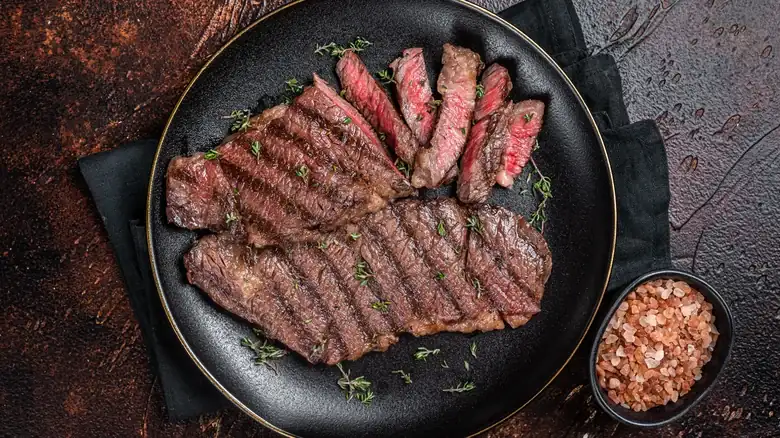
Why Cooking Steak From Cold Is A Big No-No
One of the first things many new home cooks attempt is a great steak. It's like nailing a perfect French omelet, or making restaurant-quality scrambled eggs — simple dishes that teach us so much about the process and spirit of cooking. It's a mark of progress, and getting it just right is a real achievement.
You might be wondering: What is tempering, anyway? It can sound like one of those irritating buzzwords you often hear in culinary circles on the internet, but it's actually a crucial step for more than just steak. Essentially, tempering meat means bringing it to a slightly higher temperature before cooking. This has several benefits, but the most important is consistency. Cooking a cold steak straight from the fridge results in an overdone exterior and an underdone interior. It affects the flavor, too — properly cooked steak retains its juiciness while allowing the natural taste of the meat itself to develop as the fat renders. With a cold steak, you miss out on these benefits, as the interior doesn't have a chance to render properly, while the exterior loses moisture and flavor from overcooking.
How to ensure your steaks are tempered properly
Just a little forward planning can help mitigate this common steak-cooking mistake and ensure a significantly better result. The proper technique is actually incredibly simple, too. All you have to do is remove your steak from the fridge 30 minutes or so prior to cooking it. You can adjust that timing based on things like ambient temperature (if it's a swelteringly hot day, your steak will come up to temp faster) or the thickness of your cut (a two inch thick porterhouse is going to take a little longer than your standard cut of sirloin).
If you're worried about making sure you get it right, take a cue from the professionals and get yourself a probe thermometer (and if you can't, you can also check steak temperatures with a cake tester). Having an accurate idea of what temperature your meat is at any given time isn't just going to help you know when to start cooking, it'll ensure that you never run the risk of overdoing your steak again.
What to do if you don't have the time to temper your steak
If you're really in a pinch and you need that steak on the fly, don't despair — you can still get great steak straight out of the fridge, but remember that you'll have to adjust your technique. When cold steak hits a ripping hot pan, the muscle fibers in the meat seize up. That contraction is bad news for us cooks — you'll lose moisture, and worse still your steak will end up a chewy mess. Toughness is the enemy of good steak.
To avoid this, you can use an unusual method known as cold-searing. Start your steak off in a cold pan, gradually bringing up the temperature and flipping frequently until your meat is cooked perfectly and you've achieved a lovely golden crust. Starting things off cold means that your steak won't tense up on you, and will actually encourage the fat within to render more effectively anyway — so you won't run the risk of losing any flavor.