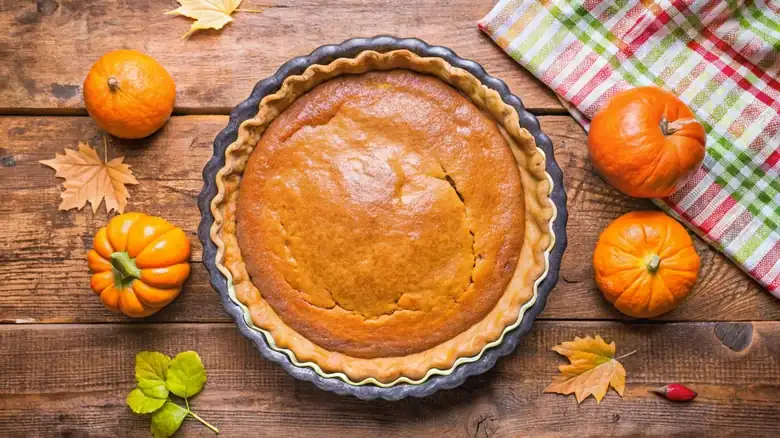
The Best Way To Freeze Leftover Pie
The holidays guarantee many things, but few are as great as a surplus of pie. However, even the biggest sweet tooth sometimes struggles to finish it all. Jennifer Boggiss, CEO and co-founder of Heilala Vanilla, spoke with us about how to freeze pies to preserve their flavor and texture for the months to come.
“When you're ready to enjoy it, defrost it in the fridge overnight and warm it in a low oven (160 degrees Celsius or 325 degrees Fahrenheit) to refresh the crust and filling,”
"Wrap the pie tightly in plastic wrap and foil to prevent freezer burn," Boggiss says. "Avoid freezing pies with delicate fillings like custard or whipped cream, as they don't freeze well and can separate when thawed." What is freezer burn? It's the process of dehydration and oxidation caused by air interacting with frozen foods. Plastic wrap and foil are among the best tools to prevent freezer burn, thanks to their effectiveness at keeping out air and maintaining a tight seal.
Instead, only freeze varieties with more substantial fillings, such as mince, pumpkin, or apple pie. While they may not return to their former, fresh glory, they stand up significantly better to the process of freezing, thawing, and warming than dairy-based desserts. But don't think there aren't ways to revive them back to a state of deliciousness — Boggiss gave us tips on that as well!
How to reheat frozen pie
Thawing and warming a frozen pie isn't as simple as removing the plastic wrap and sticking it in the oven. It's about balancing enough time to revive flaky crusts and warm gooey centers without losing moisture or burning the crust.
"When you're ready to enjoy it, defrost it in the fridge overnight and warm it in a low oven (160 degrees Celsius or 325 degrees Fahrenheit) to refresh the crust and filling," Jennifer Boggiss suggests. Defrosting ahead of time, combined with relatively low heat, ensures the filling warms at the same rate as the crust, giving you an evenly cooked dessert. If you're unsure whether your pie's center has reached the right temperature, try poking the middle with a toothpick and testing the temperature of the filling that clings to it.
If your crust finishes before your filling, Martha Stewart's timing advice for achieving a golden crust can help prevent burning or drying out. A bit of aluminum foil around the pie's edge — or even a sheet over the whole pie — protects it from direct heat. You'll still get plenty of ambient warmth to heat the pie through, but the crust is at significantly less risk of getting ruined while the filling catches up.