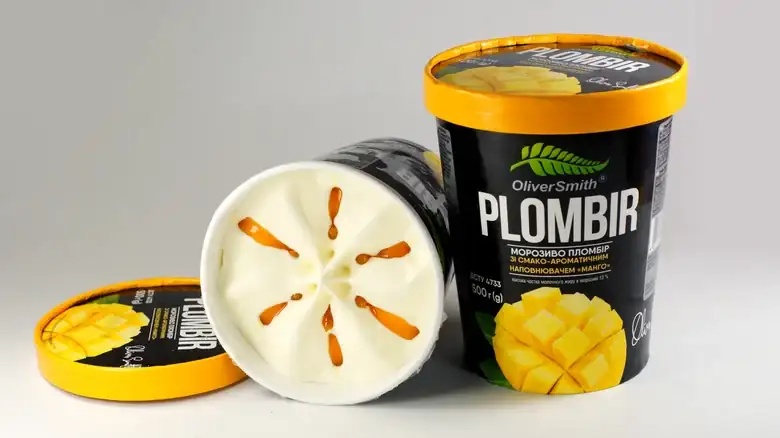
The French Origins Of Plombir, The Famous Russian Ice Cream
Ice cream is a global dessert staple. Whether we're speaking of the traditional, simple vanilla style and the alluring soft-serve varieties popular in America, or the international takes like stir-fried ice cream from Thailand, it can be found just about anywhere.
Throughout history (and, of course, the internet), there have been rumors that the French delicacy was first made as a dinner party dessert that was served to Napoleon while he negotiated the Treaty of Plombières in 1858. Unfortunately, this is only a fun legend with the ice cream's birthdate and true origins mostly unknown. We do know, however, that it is referenced in royal Parisian cookbooks that predate the event by 43 years, making it logical that the ice cream itself existed well before. Glace plombières' name directly translates to 'plumbers ice' and refers to the lead mold used to make the ice cream – the 'plomb' part is also the French word for 'lead' — as well as its city of origin, Plombières-les-Bains.
Over time, the dessert gained popularity and made its way to Soviet Russia where it became ubiquitous in the 1930s and adopted the name 'plombir' in honor of its French origins. During this time, it was also held to the strict regulations of the GOST, Russia's State Union Standard.
How to make and serve plombir
Following the fall of the Soviet Union, the regulations regarding its composition were dropped, but their influence defines plombir's composition to this day in terms of fat, sugar, and milk. In simplest terms, plombir is meant to be a very rich, flavorful, and velvety ice cream with about 15% fat. Replicating the strict standards, there are recipes out there that the at-home chef can follow in creating this that require a complicated process of tempering, freezing, and whisking.
However, the simplest recipe to start your ice cream journey asks for simple ingredients: heavy whipping cream, sweetened condensed milk (both of these aim to get you that rich, fat-to-sugar ratio), and vanilla extract — though this omits the rich egg yolks that are so associated with plombir.
As a pro-tip, the best option with this would be placing ice cream cones into a muffin tray and scooping the plombir into each. This allows for easy, grab-and-go efficiency while taking care of the freezing part of the process. Of course, this only works with flat-bottomed cones, rather than pointed waffle cones — like the mini-cake cones it was traditionally served in. If you want to be really traditional, marinate some dried or candied fruit in kirsch and mix that in before serving.