How Does Vanilla Flavor Differ From Extract?
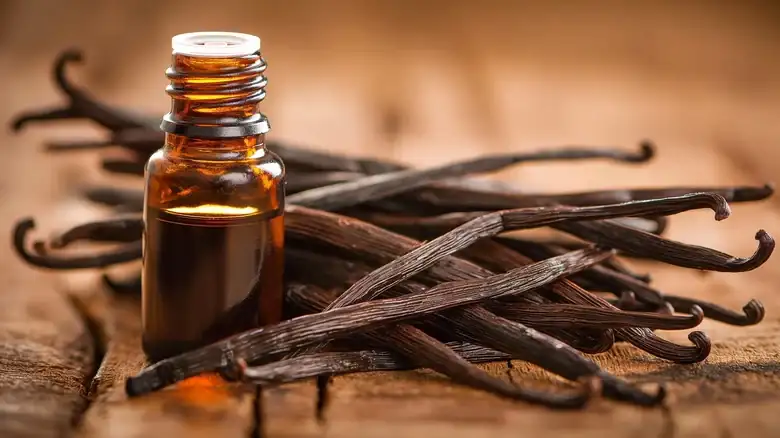
There are so many different forms of vanilla: You have the dried, leathery fruit pods packed with thousands of tiny black seeds; thick vanilla pastes in jars; and even ground-up vanilla powder.
Vanilla extract is made by soaking vanilla pods in ethyl alcohol and water. While the exact proportion of the ingredients varies, the FDA requires products labeled "vanilla extract" to contain at least 35% alcohol and 100 grams of beans in every liter. Though the organization does allow for additional ingredients, such as sugar, corn syrup, and glycerin, extract always gets its flavor from real vanilla pods and a compound known as vanillin that is naturally present in them. Some bakers say you can tell vanilla extract is "real" if it only uses the beans, water, and alcohol.
On the flip side, vanilla flavor mimics the taste of the spice using artificial ingredients, rather than real beans. It uses a synthetic version of vanillin produced in labs, typically extracted from petrochemicals or lignin, which comes from wood pulp. This all affects how vanilla flavor and extract taste, and how the two products are used in cooking.
The difference in taste between vanilla flavor and extract
In addition to using synthetic chemicals, vanilla flavoring may contain additives such as coloring to darken its hue, or cocoa and tea to give it a deeper flavor similar to genuine extract. This leads to both pros and cons: For one, vanilla beans are the second most expensive spice in the world, so the extracts produced from them are high-priced, too. Whereas an ounce of extract can cost you $6 per ounce, it's easy to find imitation vanilla flavor for $0.10 to $0.30 per ounce.
Moreover, the taste of vanilla beans (and their extract) can vary depending on the growing location and climate. In comparison, imitation flavoring made in a lab offers a more consistent and reliable source of that sweet, simple vanilla taste. Plus, the flavoring tends to pack in a higher level of vanillin than extract, meaning it has a stronger flavor overall.
That being said, artificial ingredients can also give vanilla flavor a bitter aftertaste. More importantly, while the simplicity of flavoring might be appreciated in a kids' birthday cake or sugar cookies, vanilla beans can have over 200 different flavor compounds. This gives extracts a rich and complex depth that imitators simply can't replicate. As a result, you won't find any of those subtle oak, floral, or wood-like notes in vanilla flavoring — just a simple and straightforward (yet punchy) taste.
When to use vanilla flavor vs. extract
Both vanilla flavor and extract have their advantages, so the trick to making the most of the two is knowing when to use them. Vanilla extract has a wonderful complexity, but those delicate notes can burn and evaporate when exposed to high heat. This means that using it in dishes baked in an oven will be an utter waste of money. Instead, save the high-priced extract for recipes that involve very little cooking or none at all, as that's where those rich flavor compounds will shine. Think pudding, custards, icings, and simple vanilla ice cream, for instance.
If you need a dash of that floral sweetness in baked recipes, stick to vanilla flavor, which can withstand high-heat cooking. It's also a good idea to use flavor instead of extract in recipes where vanilla is one of many ingredients — those deep notes of vanilla pods wouldn't get a chance to shine, anyway.
Another important factor to consider is the presence of alcohol. Remember that vanilla extract contains at least 35% alcohol (some varieties have even more), which means that it can add a boozy note to your dish. Vanilla flavor is more ideal when you want to skip out on the alcohol for any reason. You could even use vanilla flavor to replace extract in any recipe using a 2:1 ratio. Essentially, use double the amount of vanilla flavor in place of the extract in your dish.