The Important Rule Of Thumb To Know When Butter-Basting Fish
On a restaurant menu, the phrase butter-basted will inspire many diners to plunk down hard-earned cash. Fortunately, this technique is also super easy to pull off at home, and is useful for everything from steaks to pork chops to seafood.
In a standard basting procedure, the method is to repeatedly baste your protein with butter as it cooks, turning it over frequently to promote a crisp, satisfying crust — not to mention imbue it with a rich buttery flavor, which you can also infuse with herbs and aromatics (like in an herby lemon butter fish). But fish is decidedly more delicate than beef, pork, or poultry, which means flipping it may tear the flesh and result in a fallen-apart meal.
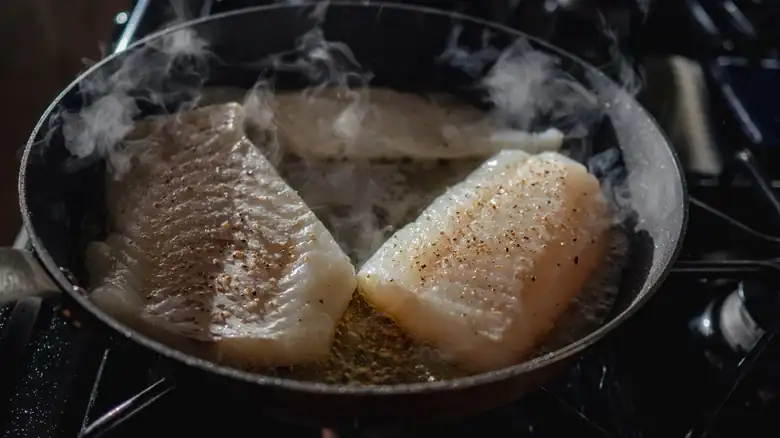
You may know how to butter-baste your steak, but this difference will ensure your fillet stays in one beautiful, buttery piece. Once you're ready to cook your fish, heat up your oil in a pan until it's just shy of smoking, then place the fillet skin-side down on the hot surface. By allowing the fillet to stay put from start to finish, you'll be able to get a super crisp crust from its continued contact with the pan, and the hot butter helps cook the more fragile flesh as you baste.
More basting tips for your fish
When preparing to do your butter basting, there are a few helpful tips to get started. Prior to cooking, it's important that your fish is thawed and dry (you can blot it with a paper towel prior to cooking, if necessary). Seasoning with salt will not only flavor your fish, but act as a dry brine that is critical to creating a crisp crust and contrasting tender interior, too. From there, you can rely on Gordon Ramsay's tilted pan technique for basting, allowing the butter to pool in the corner of the pan so you can easily scoop it up and spoon over the flesh of your fish.
When it comes to fish selection for this process, you're looking for something flaky and white (like cod, halibut or sea bass), with a thickness of around 1 inch, and your finished internal temperature goal is about 130 degrees Fahrenheit. There are some schools of thought that say flipping once is fine, but if you follow this alternative guidance, be extra careful and use two fish spatulas instead of one if possible. Regardless of your selection, following this process and skipping the flipping step will give you a fillet that's cooked to perfection — and a joy for seafood-lovers in any setting.