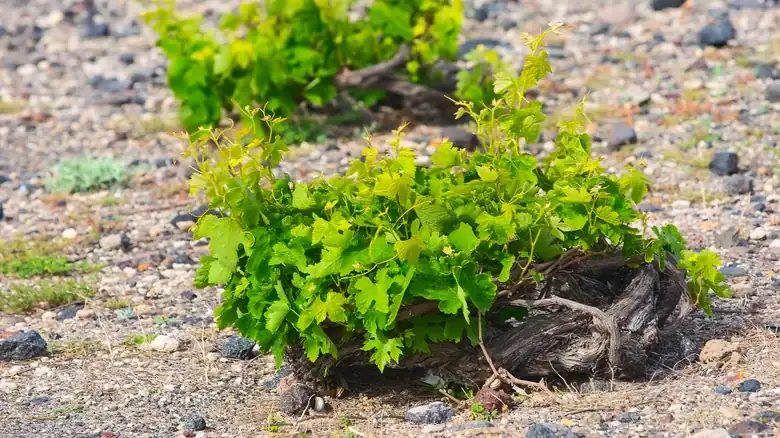
La forma única y tradicional en que se cultivan las uvas en Grecia
Las tradiciones vinícolas y las particularidades regionales son fascinantes, y cada una cuenta una historia sobre el lugar, desde el vino de la longevidad rico en antioxidantes (Cannonau de Cerdeña) hasta la antigua tradición del vino naranja natural de Georgia.
Wine traditions and regional particularities are fascinating things, and each tells a story about the place, from the antioxidant-rich longevity wine (Cannonau of Sardinia) to the country of Georgia's ancient, natural orange wine tradition. The same is true of grapevines in the idyllic Santorini islands in Greece. When most people think of grapevines, they picture rows of tall, trellised plants. But on Santorini, grapevines take on a whole new form, shaped by a method honed over centuries to adapt to the island's harsh climate. Known as kouloura, this vine-training technique crafts grapevines into stunning, basket-shaped formations resting low on the ground, with a wreath-like border around the vine's trunk. It's not just a beautiful sight — it's a practical solution for helping vines thrive in a harsh environment.
Kouloura dates back to ancient times, with archeological evidence showing signs of a wine culture on Santorini in prehistoric times, and Greece was renowned for its winemaking during Alexander the Great's reign. So, it's no wonder that Greek viticulturists devised some methods for dealing with its environment. Santorini, a volcanic island, faces a harsh climate with little rainfall, strong winds, and intense sunlight — challenges that make grape cultivation difficult. However, Greek winemakers ingeniously crafted kouloura to protect their crops and produce exceptional wine. The shape of the kouloura serves several vital purposes. First, the circular formation shields the grapes from the wind, which can damage delicate vines. It also protects the grapes from the intense sun, allowing them to ripen more evenly and develop deeper flavors. Additionally, the low-growing shape helps the vines conserve moisture from the soil and occasional sea mist, eliminating the need for irrigation.
An ancient way to protect grapes from sun and wind
The basket's size reflects the plant's age, with some boasting root systems over 200 or 300 years old. The plant leaves shield the top of the basket, and if you peek underneath, you'll find Assyrtiko grapes tucked away. Although kouloura is the most used tradition today, there was a precursor called niabelo or koulouba (old-style baskets), which were created by wrapping canes year after year on top of each other. However, these are rare today.
Under optimal conditions, the shape of the kouloura allows the bunches to be positioned inside the basket-like structure so that the berries can mature gradually, protected from sunlight and strong winds. The technique is especially relevant today as the wine industry seeks more sustainable practices. It perfectly exemplifies how Greek winemakers have blended agriculture and artistry into a centuries-old tradition. The intricate grape baskets also create a striking visual that symbolizes Santorini's commitment to sustainable, traditional winemaking while contributing to the exceptional flavors that make Santorini wines unforgettable. Kouloura is not only a practical technique — it produces masterpieces.
The kouloura method is woven into Santorini's winemaking culture, allowing the island to produce some of the world's most celebrated wines, such as Assyrtiko. It remains a perfect blend of tradition, artistry, and innovation.