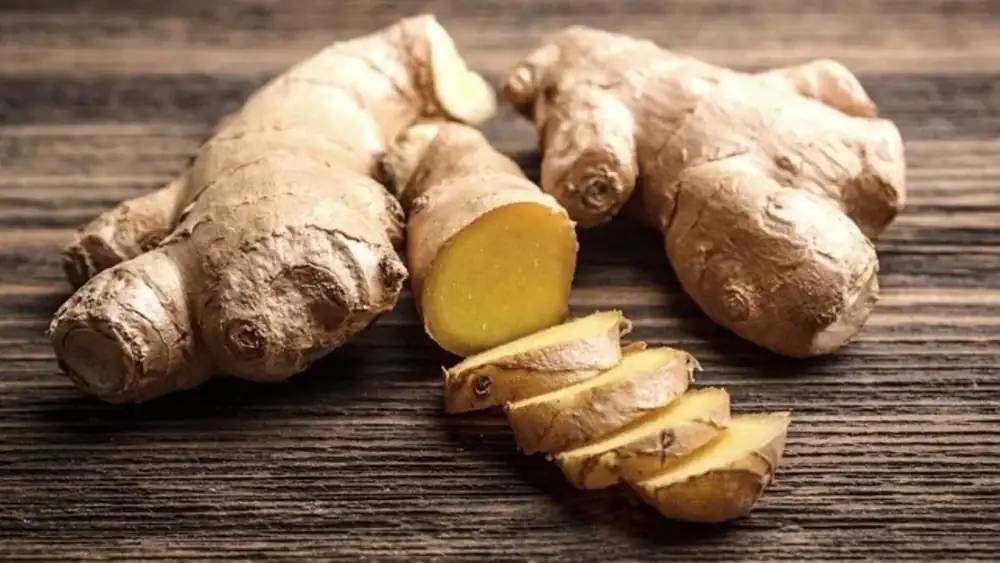
Ginger in drinks: how to avoid it being too spicy in smoothies, lemonades and infusions
If you've ever added ginger to a smoothie and ended up with a glass that's hotter than a chili pepper, this is for you.
Fresh ginger has an irresistible aroma, but its spiciness can overpower a drink in seconds. The key is learning how to use it in moderation. Three factors determine how spicy ginger is: the amount, the cut, and the contact time. By controlling these three points, you achieve the desired aroma without letting the spiciness dominate the glass.
There's also a detail that few mention. Fresh ginger is the most manageable option for drinks because you can slice it thinly and remove it as needed. Dried or ground ginger is a different story: its spiciness compounds change during processing, and even a pinch can be unbearably intense. Once mixed into the drink, there's no way to reduce the heat.
The three factors that determine whether your drink is spicy or not
The cut matters more than it seems. Slices or slivers are more controllable than grated ginger. When you grate, you expose much more of the root's surface, so the flavor is extracted very quickly, and it's incredibly easy to overdo it. With slices, the extraction is more gradual, and the result is more predictable.
The next step is quantity. In a smoothie, you can't remove the ginger halfway through blending, so the margin for error is small. The trick is to start with a thin slice, one or two centimeters long, and taste the mixture before blending. If it's not enough, add another slice. Never the other way around.
And then there's the contact time, which makes all the difference in hot drinks. Two or three slices in hot water for five to eight minutes is usually enough. The key is to remove the ginger when the flavor is just right. If you leave it in, the spiciness will continue to rise even after the cup is off the heat.
Fresh sliced ginger gives you control; grated and powdered ginger turn the glass into Russian roulette.
Smoothies, lemonades and infusions: the trick for each case
For smoothies, choose a base with character. Fruits with a strong flavor and texture—mango, banana, pineapple, peach—balance ginger better than neutral fruits. Yogurt also works well: its acidity and creaminess round out the overall effect. However, sweetness can soften the perception of spiciness, but it doesn't eliminate it. If you've added too much, dilute it with more fruit or base; don't add sugar.
For lemonade, my favorite method is to infuse the ginger separately. Put a few slices of ginger in hot water for five to ten minutes, strain, and let it cool. Then, gradually add this concentrated ginger to the lemonade until you reach your desired strength. This way, you control the intensity without risking using up the whole pitcher, and each person can adjust their glass with more or less ginger.
In hot drinks, remove the shavings promptly. Two or three slices in hot water for five to eight minutes are enough for a strong infusion. If you leave them in too long, the spiciness will inevitably appear. If it's too strong, more water or a splash of milk will dilute the excess.
Why powdered ginger is not a good idea in drinks (and it needs to be said)
Powdered or dried ginger sounds convenient, but in drinks, it's a classic cooking mistake. Processing it alters the compounds that produce the spiciness, making the dosage unpredictable. A pinch can ruin an entire smoothie, and once blended, there's no way to remove it. The original source from Better with Health makes it clear: fresh, sliced ginger is best. This isn't just for show; it's the technique that saves you from wasting a liter of lemonade.
The next time you make a drink with ginger, remember the golden rule: use a little, slice it, and remove it promptly. Your taste buds will thank you from the first sip.
💡 The trick of the almond
Total time: 10 minutes. Difficulty level: easy. Extra tip: store fresh ginger in the refrigerator wrapped in kitchen paper; it will last for weeks.