Andreas Till defends the aperitif as the best moment of the day
Between work and dinner, cocktail expert Andreas Till explains why an aperitif is much more than just a drink before a meal.
The day is drawing to a close, but night has yet to begin. The table is being filled with a bowl of rosemary chips, olives, and pieces of still-warm focaccia with fresh tomatoes, accompanied by a glass of sparkling wine, a spritz, a small cocktail, or a non-alcoholic beer.
In Southern Europe, especially in the Mediterranean region, the aperitivo culture evokes a sense of vacation. However, the custom isn't exclusive to vacations: traditionally, it marks the end of the workday and the beginning of the evening. Andreas Till, founder and host of Munich's Pacific Times bar and a leading figure in the cocktail world, sums it up this way: "The aperitivo is undoubtedly the highlight of the day. It marks the beginning of the most enjoyable part. It's a turning point, as well as an emotional one. Now you enter the most intimate part of the day."
It's that moment between work and home, when you meet up with friends, have a drink, and enjoy some snacks. The aperitivo fills that in-between space, welcoming friends, acquaintances, or people you happen to meet at the bar. Its modern history takes us to northern Italy, to Turin and Milan, cities that still celebrate this tradition. Turin is the birthplace of the tramezzino, the simple Italian sandwich, and the city is famous for its vermouth. Milan, meanwhile, is known for Campari. Both contribute a bitter note to the drink.
“Bitter and wine-flavored drinks are ideal to have before meals, rather than stuffing yourself with sweets or cream,” says Till. According to him, drinks only mark the beginning of the evening, so they shouldn't have an excessive alcohol content.
The spritz brings all these elements together. Its history dates back to the Veneto region and the wine spritzers that were popular there under Austrian influence. Over time, variations developed using wine and water, and eventually bitter liqueurs were incorporated. Till attributes its success to its simplicity: it has a relatively low alcohol content, is easy to prepare, and conveys "the feeling of being in Italy for a few minutes with just one glass."
A drink alone, however, doesn't constitute an appetizer, even if some bars add a small bowl of peanuts. "In our restaurant, we always serve chips and olives as well. In Germany, there's a misconception that people used to fill up on just these snacks. The custom of preparing a complete meal has been lost."
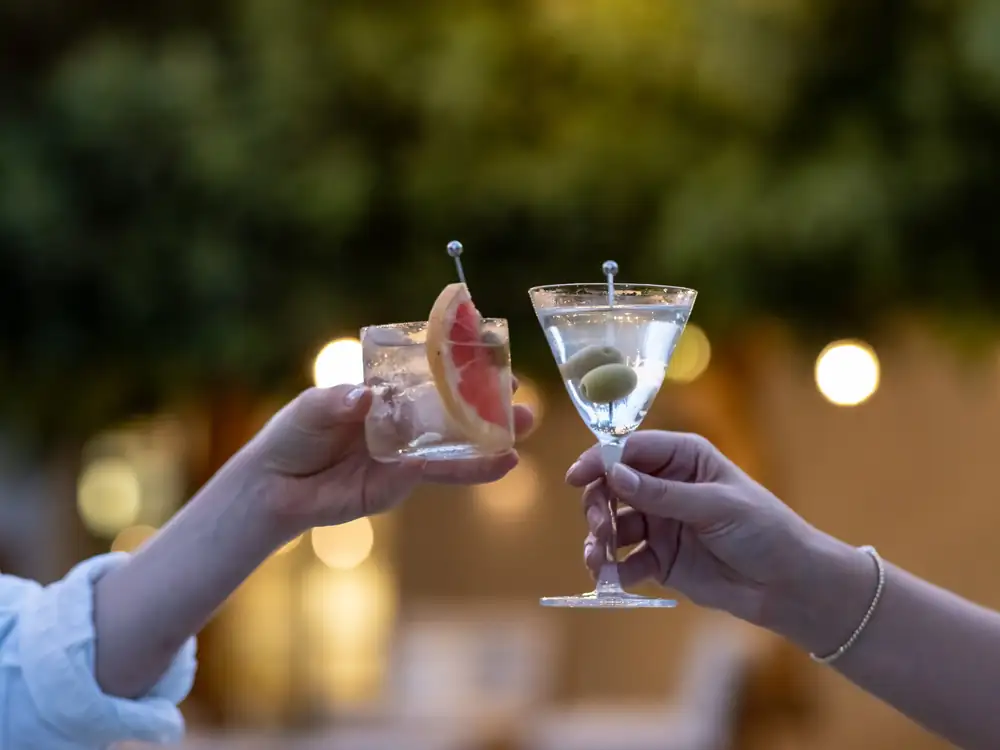
Sometimes the line between the glass and the plate blurs. A good example is the olive in a Martini: in a Dirty Martini, the brine adds a salty and flavorful touch. Some gins already have that Mediterranean flair; Gin Mare, for example, is distilled with juniper, Arbequina olives, rosemary, and thyme, among other ingredients.
The original Martini contained a much higher proportion of vermouth, but over time it became increasingly drier. "You can also do it the other way around," says Till. In the reverse Martini, vermouth takes center stage, with an alcohol content of between 15 and 20 percent. After all, the aperitivo is meant to kick off the evening, not anticipate it. That's why it breaks the routine, creates space for others, and brings back, for a few minutes, that holiday feeling associated with a bar in Italy. "The aperitivo as a whole is pure emotion," Till affirms.