Rachel Signer: “El vino natural no tiene por qué ser extraño ni estar lleno de defectos”
La periodista y enóloga Rachel Signer explica qué es el vino natural, qué mitos lo rodean y dónde trazar la línea entre carácter y defecto.
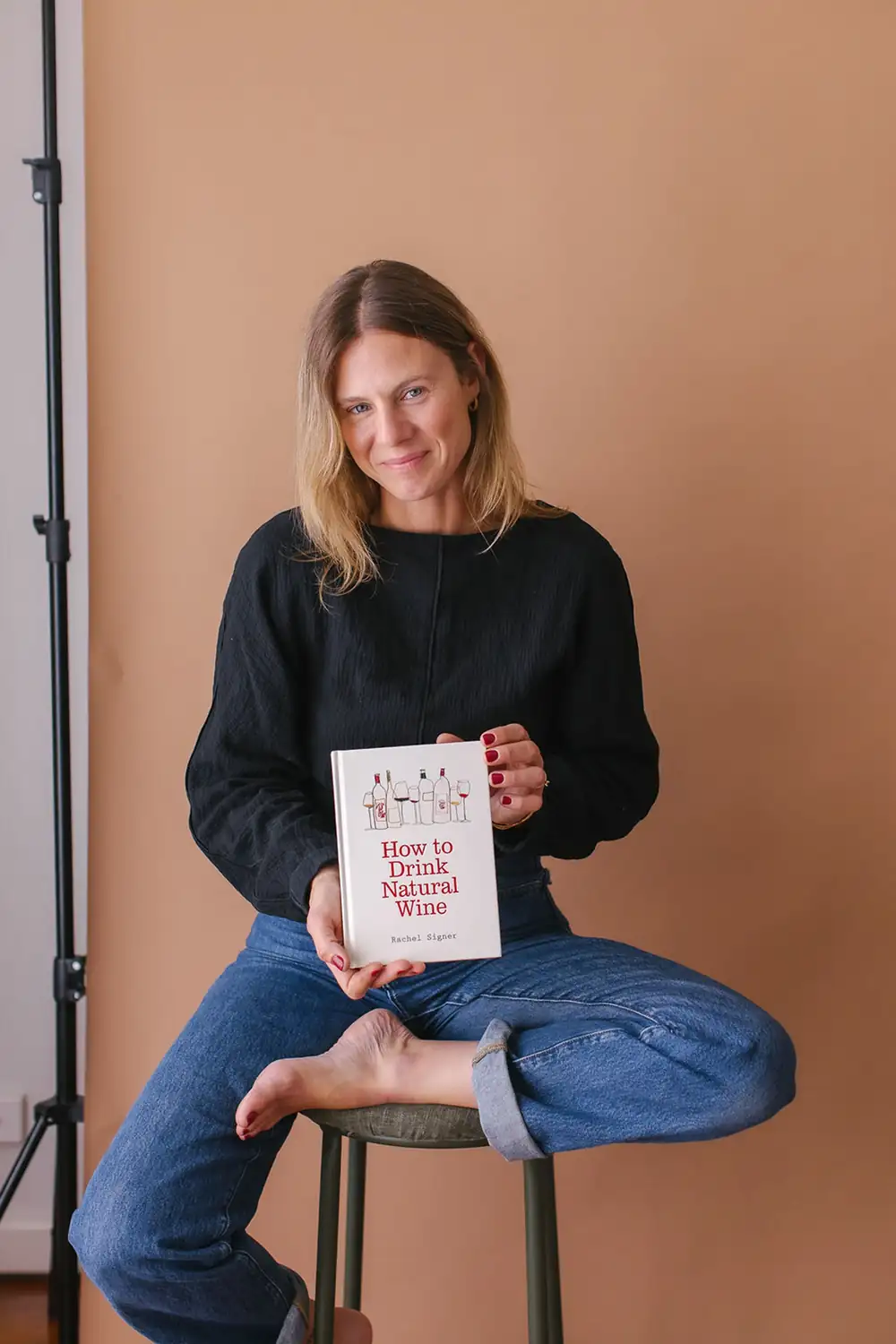
Natural wine has been surrounded by fascination and misunderstanding for years. It's associated with eye-catching labels, cloudy glasses, unexpected aromas, and a certain tribal attitude, but behind it all lies a broader conversation about how the vineyard is cultivated, the role of intervention in winemaking, and what to expect when you uncork a bottle. Rachel Signer knows this debate from the inside: a specialized journalist, founder of Pipette magazine, and a natural wine expert for the past six years, she has just published "Natural Wine: What It Is and How to Enjoy It" (Cinco Tintas), a visual and accessible guide to its origins, styles, and producers.
According to the author, natural wine comes from organic vineyards, cultivated without harmful chemicals. The grapes are harvested by hand, and the wine is made without commercial yeasts or additives; it is generally unfiltered and produced using traditional methods. These are usually small-scale productions from independent winemakers or families, not large corporations. For Signer, without healthy grapes there is no good wine, and even less so a natural one, because no additives are used to correct it. Furthermore, the climate crisis makes land management an ethical and moral issue: those who are part of this movement have a responsibility to regenerate the soil, avoid chemicals whenever possible, and seek natural methods to care for their vineyards.
The term “natural wine” is as popular as it is controversial: it lacks a single legal definition, and some producers believe it can suggest that other wines are “less natural.” Even so, Signer considers it the best available term for distinguishing wines made with organic farming and traditional fermentations from conventional wines, which come from chemically treated vineyards and industrial production. Some prefer to speak of “vins vivants” a particularly beautiful expression in French, or of organic and artisanal wines. Ultimately, it’s a matter of personal preference.
One of the most widespread misconceptions is that all natural wines are strange or flawed. They may have aromas and flavors characteristic of spontaneous fermentation, but that doesn't mean they're poorly made, and reducing an entire category to a single profile is pointless. Even so, there is a limit. "The only defect I truly cannot tolerate is what's called 'mucus,' which I discuss in the book. It gives the wine a flavor reminiscent of damp almonds or cardboard. Winemakers shouldn't market bottles with this defect."
Signer made natural wine by hand for six years and also planted and tended vineyards. This experience taught her all the stages of winemaking and the logistical details, perhaps less romantic but fundamental, such as corks, bottles, labels, and transportation, as well as the enormous importance of vineyard management. Anyone who wants to understand wine, according to her, should participate in a harvest or have some practical experience during the picking, and the book includes tips for doing so.
For beginners, the key is to try wine with curiosity and without too many expectations. Many people have deeply ingrained ideas: someone might say they hate sparkling wines if they've only ever tasted very sweet champagnes, or that red wine gives them a headache because they've drunk cheap, high-alcohol, high-sulfite commercial wines. "I wish people were less afraid to order a bottle. If it's three, it makes sense: it's usually cheaper than ordering by the glass, and it also allows you to enjoy how the wine evolves throughout the meal."
According to the author, Spain is experiencing a particularly fruitful period. She highlights its vineyards, varieties like Garnacha, and regions like Catalonia, and the book includes several Spanish producers of natural wines. It's impossible to talk about natural wine in Spain without mentioning Bar Brutal in Barcelona, a place that has served as a meeting point for the international natural wine community.
Among the places he mentions in the book, Georgia particularly impressed him: it is the oldest wine-producing region in the world that has maintained continuous production, and its wine and cuisine reflect a traditional, non-commercial culture. As favorite natural wines, he cites Bianco Trilli from La Gazzetta (Umbria, Italy), Cuvée Marguerite from Matassa (Roussillon, France), and Vino Rosso from Dinavolo (Emilia-Romagna, Italy), three bottles that express the diversity of this world and the connection between small producers and very specific territories.