El vino sigue en manos de los mayores y la industria apenas cambia
En el valle de São Francisco, en Brasil, las vides dan dos cosechas y media al año, y de ese caso la columna extrae una lección para el sector.
Priscilla Hennekam published a reflection on LinkedIn titled "Rethinking the Impossible." According to the text, the São Francisco Valley, in northeastern Brazil, between the 8th and 9th parallels south, has a semi-arid tropical climate with more than three thousand hours of sunshine per year. According to all the manuals, grapevines shouldn't grow there. However, they do, producing two and a half harvests annually.
Hennekam argues that no one changed the climate of the valley. What changed was the question itself: they stopped asking how to copy Bordeaux and started asking what they could do with what they had. According to her, what has never been done is continually confused with what cannot be done, and when people say "it's impossible," they usually mean "I still can't imagine how." She proposes replacing the question "Why can't it be done?" with another: If it were possible, what would have to change?
The column applies this idea to the wine sector. For years, there has been talk of change, but the author observes a world that seems immutable, trapped in the notion that there is no alternative to the status quo. However, solutions already exist: people want to have fun and seek experiences outside of mass tourism, something that wine tourism offers; there is a desire for biodiversity, and the wine market is impressively diverse; and the moment of consumption matters more today than the product itself.
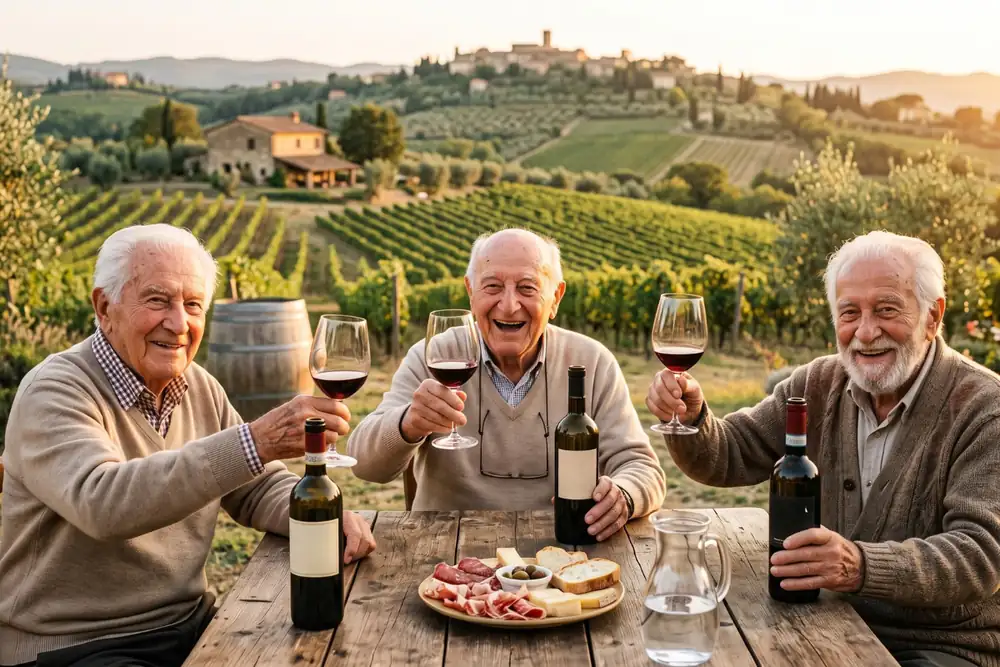
The column bluntly addresses the underlying problem: wine is in the hands of the same old guard, who have no intention of relinquishing control. It clarifies that the issue isn't that wine is a product for older people, but rather that they are the ones who consume it. The problem affects the entire supply chain: corporations, organizations, media outlets, and critics. And it also affects young people, who, to enter the world of wine, have to adopt an elder persona: they learn the language, the rituals, and the prudence, and they can't seem to shake it off.
Generational change alone won't suffice, because the older generation has already influenced the next. For this column, the first step is to clearly define the problem, because the impossible only becomes possible when one starts from an awareness of reality. Real limitations must be distinguished from unquestioned assumptions. That the wine remains in the hands of those who have preserved it for forty years is not a real limitation, but an assumption, and the most convenient one for those who defend it.