
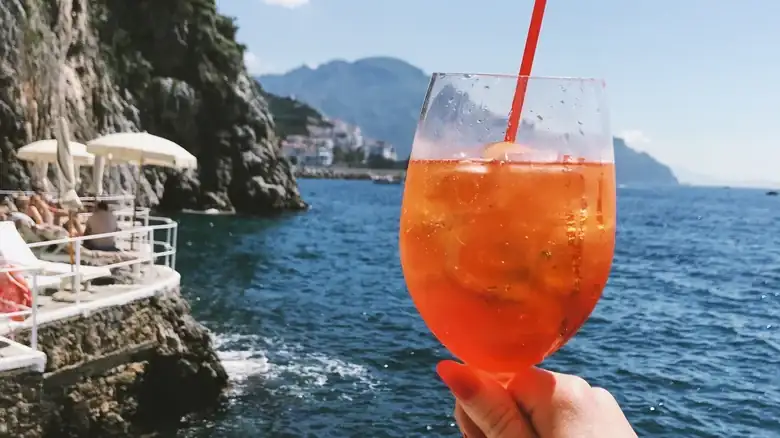
A todo el mundo le encanta un Aperol Spritz, pero ¿a qué sabor sabe exactamente el Aperol?
Son casi las 18:00, la luz del atardecer es dorada y tienes un Aperol Spritz en la mano. ¿Qué mejor manera de relajarse después de un largo día? El Aperol Spritz, agridulce y con burbujas perfectas, ayuda a despejar el ánimo, y su color naranja dorado es una imagen alegre.
It's almost 6:00 p.m. there is golden hour light, and you have an Aperol spritz in hand. What is a more perfect way to relax after a long day? The bittersweet and perfectly bubbly Aperol spritz helps loosen the mood, and its golden orange color is a cheerful sight. While sipping on this cocktail during aperitivo time, you've probably never considered what creates the distinct flavor of Aperol. How to make the cocktail is easy enough to understand, Aperol, Prosecco, and soda water, but what exactly is the Aperol flavor?
The first obvious notes from Aperol are citrus and bitter flavors. The company confirms the main tasting notes as, "Lightly alcoholic, with zesty orange and complex herbal notes, complemented by a touch of vanilla". There are other undisclosed fruits present in the alcohol, as the company says Aperol is an "infused blend of high-quality fruit, herbs, and roots." The iconic color is reminiscent of an orange, but it contains artificial dye to amplify the color.
The official recipe is a safely guarded secret, but there are a few other known ingredients contributing to Aperol's flavor. There is a mix of both bitter and sweet oranges, and rhubarb, the deep red stalks best known for their role in pie. Gentian, a bitter herb used to aid digestion, and cinchona, a bitter tree bark also added to tonic water (known as quinine), are added. Other herbs and roots are also incorporated, but these are kept under wraps.
A brief history of Aperol
The original recipe for Aperol is still used today, but how it is poured and sipped has changed. Before the Aperol spritz became widely known as one of the best Italian cocktails, Aperol was considered a cheap alcohol that was mostly drunk by locals of the Veneto region. It was often sipped on as a spritz and during aperitivo time (before dinner), as is done today. However, when Campari Group purchased the company in the early 2000s, it heavily invested in marketing to globalize the popularity of the drink. The Aperol spritz underwent some changes to make it more appealing. The large glass bowl with delicate a stem is a modern touch; Aperol was previously served in stout, thick glass tumblers to withstand any type of bar environment. In addition to the orange slice we see in today's modern Aperol spritz, a green olive is also one of the traditional garnishes.